Audience: Faculty
-

Laffan, N. (CM) – Digital Memory Tools and Their Impact On Collective Remembering
Today, both individual and collective memories are increasingly mediated by digital platforms. Both are fundamentally enmeshed in platform ecosystems that orient around commercial imperatives very much at odds with community […]
-

Zhu, R. (ECE) – From Neuromorphic Principles to Efficient Neural Language Architectures
While Large Language Models exhibit remarkable capabilities, their reliance on the standard Transformer architecture imposes prohibitive computational costs and quadratic memory complexity. To bridge the gap between biological efficiency and […]
-
de Priester, J. (ECE) – Hybrid Reinforcement Learning
Reinforcement Learning (RL) is a machine learning paradigm that trains a decision maker, or policy, by learning from interaction with an environment. The power of RL lies in its ability […]
-
Tran, L. (BMEB) – Polysome Shadowing: A Long-Read Sequencing Approach to Study Translation
Translation is a central and highly regulated step of gene expression, yet there are few quantitative, high-throughput tools to study translation. Existing methods such as sucrose gradients provide only bulk […]
-
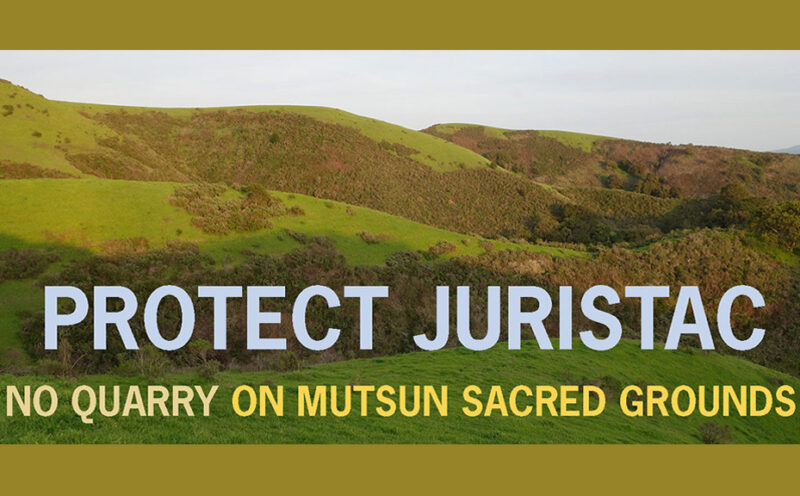
Friends of Juristac UCSC Chapter Meeting
Join the UCSC chapter of Friends of Juristac at our next meeting on Wednesday, December 3, 5:30–6:30 p.m. at the College Nine/John R. Lewis Community Room. Stand with the Amah Mutsun […]
-

Silicon Chip Design & Semiconductor Engineering Info Session
Build the semiconductors powering the future. With the global demand for advanced chips on the rise, engineers who can design, simulate, and optimize integrated circuits are highly sought after. Learn […]
-
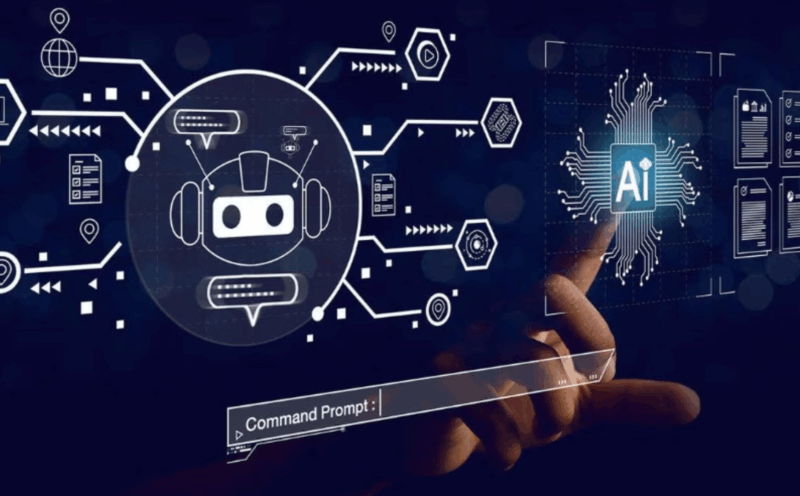
AI Application Development Program Info Session
Lead Innovation as a Machine Learning Engineer. As AI becomes central to products and services across industries, there’s a growing demand for professionals who can design, build and deploy intelligent […]
-
DeGrendele, C. (AM) – Learning-Augmented and Structure-Preserving Methods for Conservation Law Solvers
In this work, we develop numerical methods for conservation laws that explore statistical, structure-preserving, and machine-learning-based approaches, each built on top of traditional numerical solvers. First, we develop a general […]
-
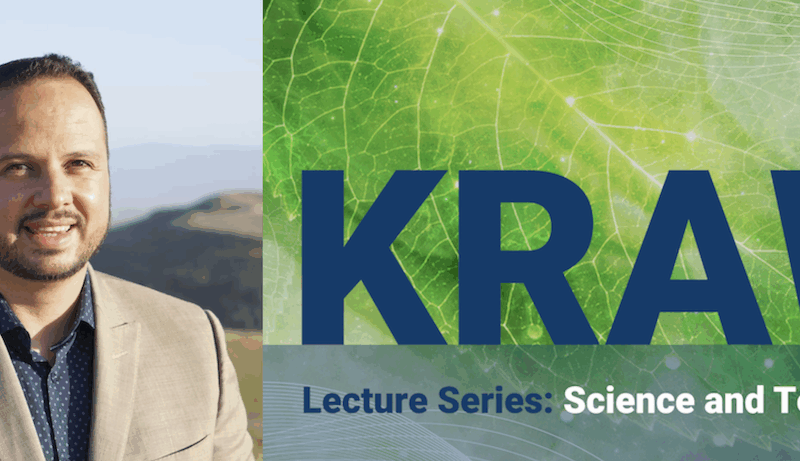
Kraw Lecture: Sensing the Unseen: How Drones and Ground Sensors Reveal the Hidden Air Quality Impact
How can flying robots help us track the air we breathe and the pollutants we can’t see? In this talk, Assistant Professor Javier González-Rocha will share how his team uses […]