
Environmental Studies Seminar Series | Morgan Gilmour and James D. Jacobson, NASA Ames Earth Science
In person and via Zoom (Meeting ID: 978 5545 8946, Passcode: 454736).
If you are unable to stream the talk live and need to access a recorded version, please contact Stacy Philpott at sphilpot@ucsc.edu. A UC Santa Cruz email address is required to access the recording.
Host: Bo Yang
Speaker: Morgan Gilmour, NASA Ames Earth Science
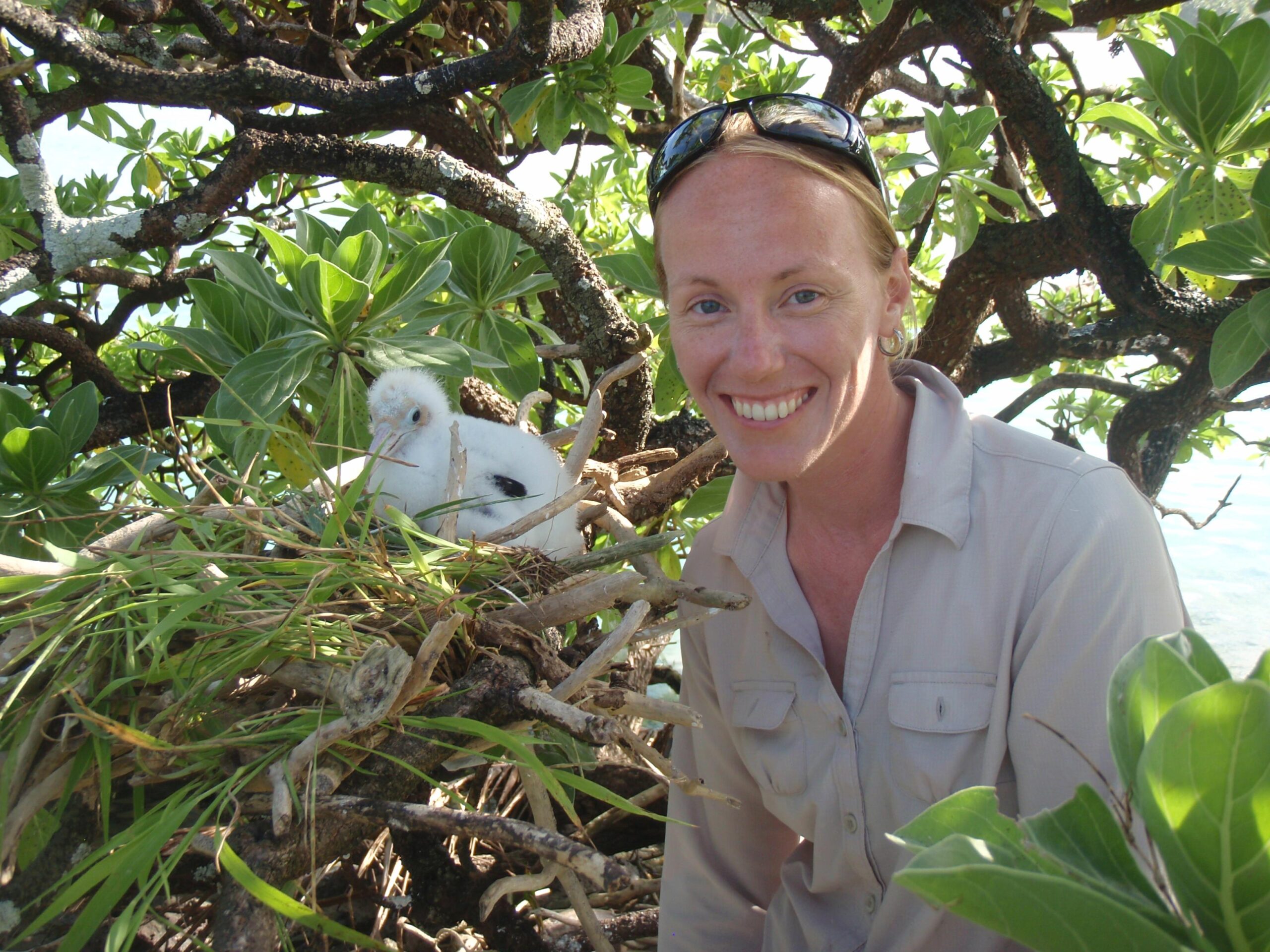
Title: NASA’s Internet of Animals project: Biologging reveals global insights
Abstract: NASA’s Internet of Animals project uses biologging to study Earth system processes and inform biodiversity. Working with a team of scientists and engineers, we aim to create a forward-looking approach to improve our ability to monitor the Earth, animal ecology, and remote environments. I will highlight case studies in which we used biologgers to quantify protections of a marine protected area, estimate tuna-fisheries interactions, and develop sensors that contribute to the validation of satellite measurements.
Speaker: James D. Jacobson, NASA Ames Earth Science
Title: Introduction to EPIC Lab & Using MASTER over Wildfires in the Continental US
Abstract: This seminar will introduce the Earth and Planetary Instrument and Calibration (EPIC) Lab at NASA Ames Research Center and highlight its role in advancing airborne remote. I will first provide an overview of the laboratory’s research activities, instrumentation, and capabilities, with an emphasis on how airborne imaging systems are used to investigate environmental processes at spatial and spectral scales that complement satellite observations at home and beyond.
The second part of the seminar will focus on the MODIS/ASTER Airborne Simulator (MASTER), an airborne imaging spectrometer that measures reflected and emitted radiation across the visible, near-infrared, shortwave infrared, midwave infrared, and longwave infrared portions of the electromagnetic spectrum. I will discuss how MASTER observations can be used to detect and characterize active fires, quantify their thermal and spectral properties, and map fire impacts across the landscape.
Examples from the recent NASA INjected Smoke and PYRocumulonimbus Experiment (INSPYRE) mission will illustrate MASTER’s capabilities for observing wildfire behavior and its interaction with the atmosphere. These observations provide a unique perspective on intense fire events and demonstrate how airborne measurements can connect processes occurring at the fire and landscape scales to their broader atmospheric impacts.