
- This event has passed.
VMCC Series: Yiman Wang
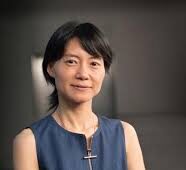
In a lecture delivered by UC Santa Cruz Professor Yiman Wang, this talk delves into Mao-era moving image culture that featured experimentation with public health, horticulture, and animal husbandry to unpack what cinematic experiments were developed, how scientific experiments were conducted, and in what ways they were intended to intertwine with the nation-wide experiment with rebuilding the new socialist human’s psyche and a new socio-political world. The talk also explores why such conjoined experiments often fell apart, what one might gain by recentering the unruly human and more-than-human “raw material” that were experimented on, and ultimately, how the environmental turn in media studies could benefit from a study of socialist trifold cinematic-scientific-socio-political experimentations.
—
ABOUT THE SPEAKER
Yiman Wang (Ph.D., Graduate Program in Literature, Duke University) is Professor and Chair of Film & Digital Media at University of California, Santa Cruz. She is author of Remaking Chinese Cinema: Through the Prism of Shanghai, Hong Kong and Hollywood (University of Hawaii Press 2013), and To Be an Actress: Labor and Performance in Anna May Wong’s Cross-Media World (University of California Press 2024). She has published numerous articles in journals and edited volumes on topics of socialist environmental media, feminist media histories, ethnic border-crossing stardom, eco-cinema, Chinese cinema, independent documentary, film remakes and adaptations. She is editor of a special issue of Feminist Media Histories on Asian Feminist Media (2019), co-editor of an InFocus Dossier on Queering Asian Media in Journal of Cinema and Media Studies (2023), co-editor of Chinese Animation: Multiplicities in Motion (2025), associate editor of Journal of Chinese Cinemas, and co-editor of the Global East Asian Screen Cultures book series published by Bloomsbury.
—
ADMISSION
– FREE and open to the public
– Located in Porter College Rm. D245
—
PARKING
– Lot 124 & 125 are the closest parking lots to the event.
– Parking is by permit or ParkMobile.
– Refer to TAPS for more parking information.
—
This program is open to all members of the public consistent with state and federal law.