• CSE Colloquium: A Journey from Programming Systems Research to AI Agents

    Engineering 2 Engineering 2 1156 High Street, Santa Cruz, CA

    Speaker: Koushik Sen, UC Berkeley and Google DeepMind Abstract: Coding has emerged as an important application area for large language models (LLMs), with a proliferation of code-specific models and their applications across various domains and tasks such as program repair, performance optimization, debugging, test generation, documentation, and security hardening. In this talk, I will describe […]

    Free
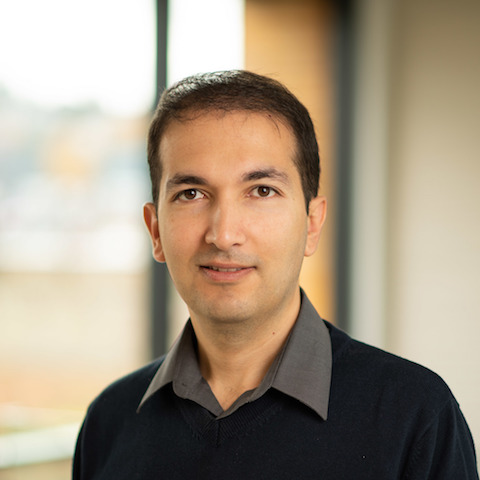
  • CSE Colloquium: Mitigating Data Scarcity via Simulation by Roozbeh Mottaghi

    Engineering 2 Engineering 2 1156 High Street, Santa Cruz, CA
    Hybrid Event

    Presenter: Roozbeh Mottaghi, University of Washington Abstract: Data has revolutionized progress across AI fields like natural language processing and computer vision. Yet, in robotics, data collection remains a significant challenge: […]

    Free
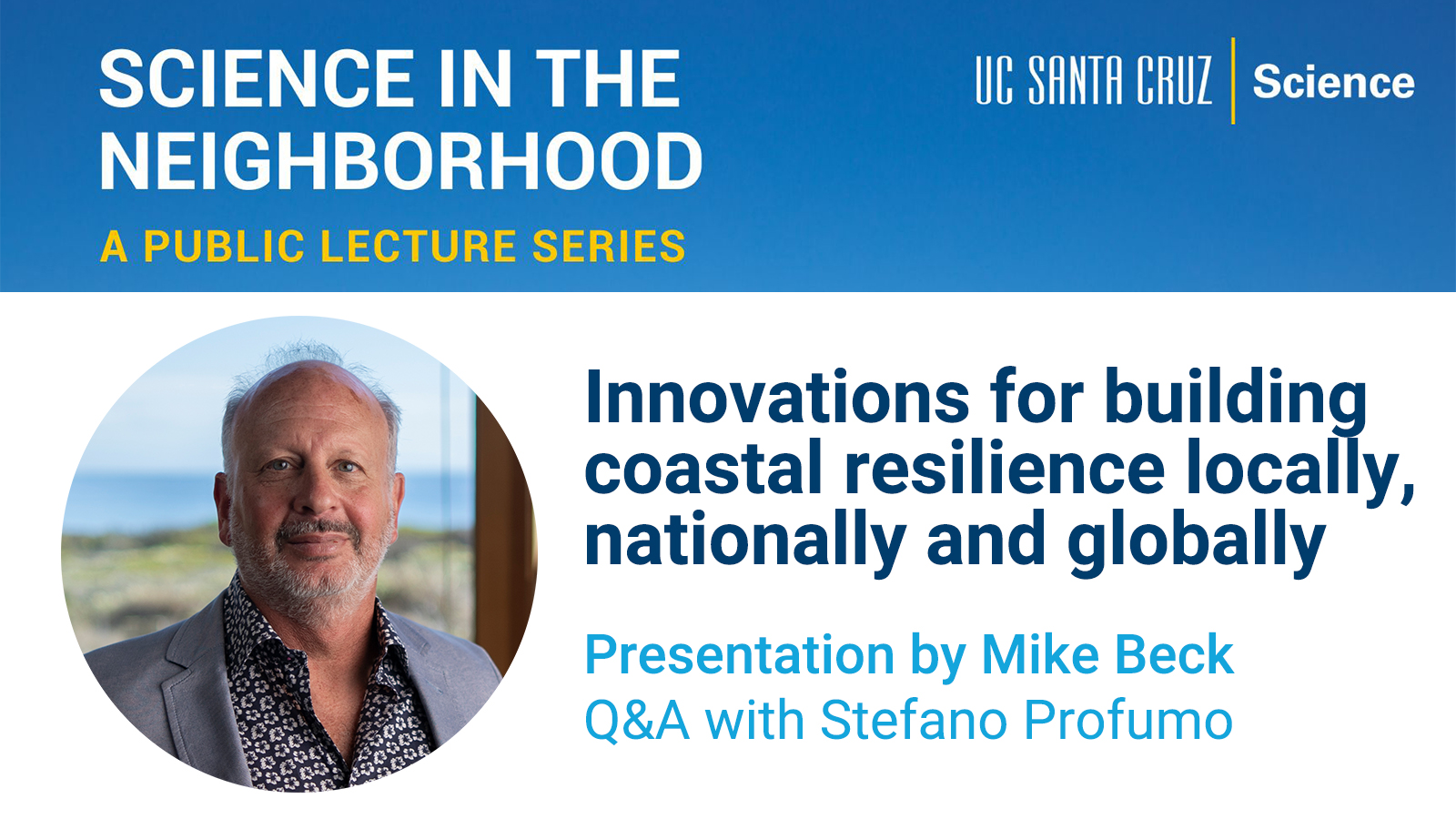
  • Science in the Neighborhood: Innovations for building coastal resilience locally, nationally, and globally

    Science in the Neighborhood
    Seymour Marine Discovery Center 100 McAllister Way, Santa Cruz, CA

    Coastal risks are growing from climate change, development, and habitat loss. The Center for Coastal Climate Resilience assesses coastal risks, promotes nature-based adaptations, and identifies innovative solutions to reduce risks to people, property, and the environment. Dr. Beck will describe recent successes in bridging ecology, engineering, and economics to develop solutions at the intersection of science, policy, and finance. This is part of the Science in the Neighborhood lecture series.

    Free
  • February 25, 2026 | Works-in-Progress with Geoffrey Bowker

    On Wednesday, February 25, 2026 at 3:00PM in Humanities 1, Room 210, join SJRC scholars on the death of infrastructure, AI, and underwater network cables and his collaborative comic book on Actor Network Theory.

  • Electroacoustic Performance and Artist Talk with the Whale Liberation Front

    Intersections of Climate Change
    Institute of the Arts and Sciences 100 Panetta Ave, Santa Cruz, United States

    Experience a performance and talk by composers and sound artists Corey Diane and Peter J. Bowling, two members of the Whale Liberation Front. The Intersections of Climate Change Series is organized with the Friedlaender Lab in conjunction with Weather and the Whale. — ADDITIONAL SERIES EVENTS – Thurs. Feb. 5, 6:00 p.m: Intersections of Climate […]

    FREE and open to the public
  • AM Seminar: The Evolving Landscape of AI for Science and Engineering: Bridging Simulation, Experiment, and Multi-scale Dynamics

    Presenter: Aditi Krishnapriyan, Assistant Professor, UC Berkeley Description: Recent advances in large-scale scientific datasets are creating new opportunities for machine learning (ML) methods to more effectively capture scientific phenomena with greater accuracy and reach. In this talk, I will discuss how these advances are both shifting ML design paradigms and enabling new scientific inquiries. This […]

  • Unexpected Returns: The Historic Entanglements of Fire, Settlement, and Stewardship in the Santa Cruz Mountains

    Intersections of Climate Change
    Institute of the Arts and Sciences 100 Panetta Ave, Santa Cruz, United States

    Join UCSC  faculty members Miriam Greenberg and Andrew Matthews as they discuss the deep regional histories of fire, from indigenous burning, settler ranching, fire suppression, and much more. This event is part of Intersections of Climate Change,  a series organized with the Friedlaender Lab in conjunction with Weather and the Whale. ADMISSION – FREE and […]

    FREE and open to the public
  • Science in the Neighborhood: Transforming Pacific salmon recovery, from genes to ecosystems

    Science in the Neighborhood
    Coastal Biology Building 130 McAllister Way, Santa Cruz, CA

    For millennia, Pacific salmon have been integral to the health of coastal ecosystems and human communities from California to Alaska. Salmon are ecological and cultural keystone species, connecting marine and freshwater food webs and supporting thriving fisheries. Yet, wild salmon have declined precipitously due to a combination of factors including dams, harvest, hatcheries, water use—and now, climate change. This is part of the Science in the Neighborhood lecture series.

    Free
  • Statistics Seminar: Evaluating Predictive Algorithms Under Missing Data

    Presenter: Amanda Coston, Assistant Professor, University of California Berkeley Description: Performance evaluation plays a central role in decisions about whether and how predictive algorithms should be deployed in high-stakes settings. Yet, in many real-world domains, evaluation is fundamentally difficult: the data available for assessment are often biased, incomplete, or noisy, and the act of deploying […]

  • Statistics Seminar: Evaluating Predictive Algorithms Under Missing Data

    Presenter: Amanda Coston, Assistant Professor, University of California Berkeley Description: Performance evaluation plays a central role in decisions about whether and how predictive algorithms should be deployed in high-stakes settings. Yet, in many real-world domains, evaluation is fundamentally difficult: the data available for assessment are often biased, incomplete, or noisy, and the act of deploying […]

  • AM Seminar: Flexible Filaments and Swimming Cups: Just Go with the Flow

    Presenter: Lisa Fauci, Professor, Tulane University Description: The motion of waving or rotating filaments in a fluid environment is a common element in many biological and engineered systems. Examples at the microscale include chains of diatoms moving in the ocean, flagella of individual cells comprising multicellular colonies, as well as engineered nanorobots designed to deliver […]

  • Landesman Lecture

    Music Center Recital Hall 400 McHenry Road, Santa Cruz, CA
    Hybrid Event

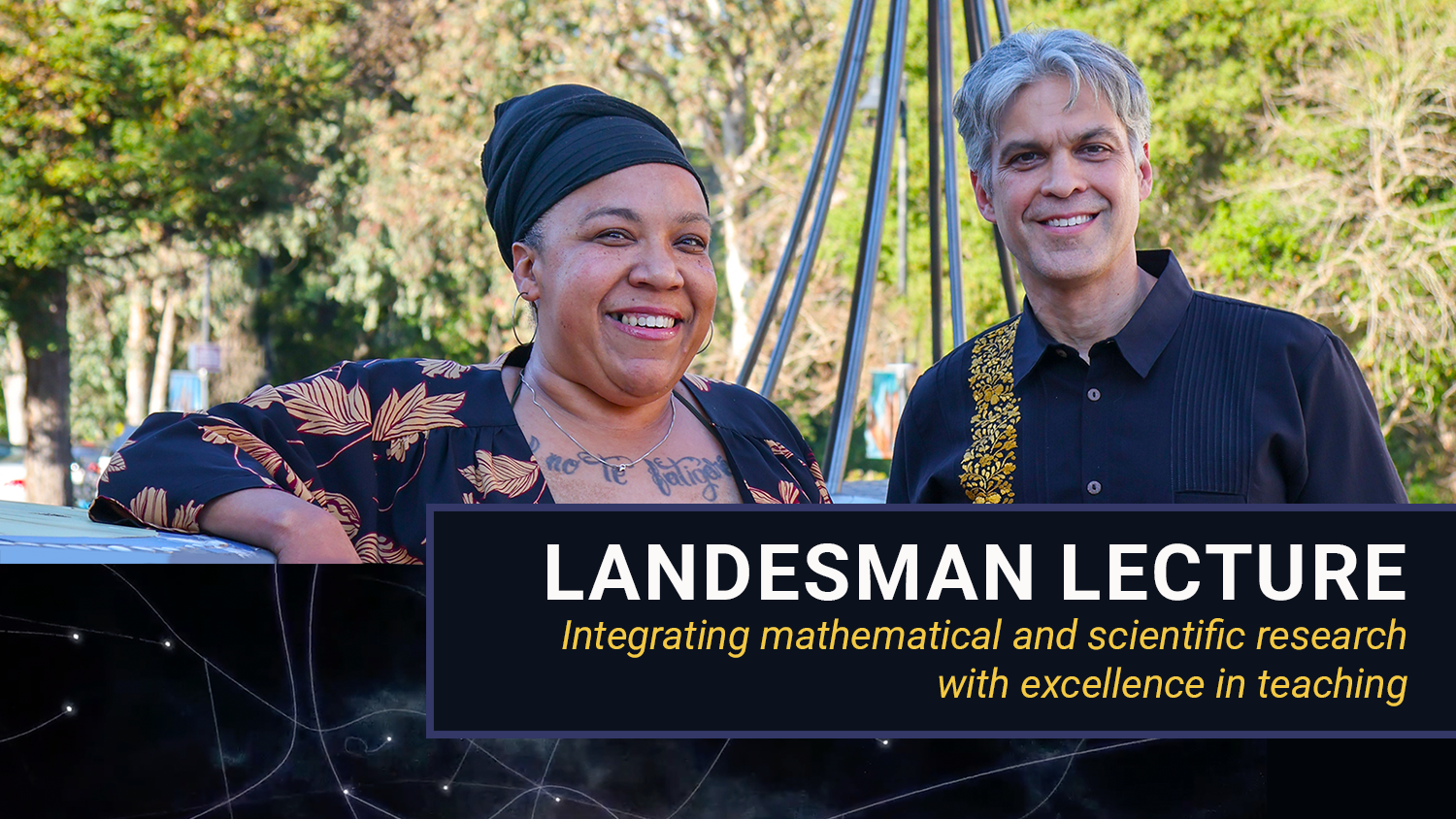
    This evening blends science, poetry, and storytelling to explore our deepest origins and shared humanity. Tracing the cosmic formation of the elements that make our bodies, we reflect on an ancestry older than nations, borders, and labels. Through verse and story, we connect stellar history with lived experience, inviting us to see how our many identities arise from the same ancestral matter. Together, we explore how storytelling can soften divisions, cross boundaries, and remind us that we are forged from one common origin.

    FREE and open to the public