• AM Seminar: Structure-Preserving Discretizations and their Applications

    Jack Baskin Engineering Baskin Engineering 1156 High Street, Santa Cruz, CA

    Presenter: Andy Wan, Assistant Professor, University of California, Merced   Description: Many models from science and engineering possess fundamental structures which are important to preserve in order for accurate and stable long-term predictions. For instance, preserving conserved quantities, such as energy, mass and momentum, are fundamental in many physical systems. Moreover, preserving dissipative quantities, such as entropy […]

  • AM Seminar: Dynamo Action Inside the Giant Planets

    Presenter: Dr. Paula Wulff, UCLA Description: Our solar system hosts six unique planetary magnetic fields. Intrinsic magnetic fields are generated deep inside planets by dynamo action. This process requires regions of electrically conducting material and energy sources to maintain the dynamo. Thus, we can learn about the deep interiors of planets, including their structures and […]

  • AM Seminar: Linear Stochastic Emulators of the Ocean Circulation based on Balanced Truncation: A Caution, perhaps, for Machine Learning?

    Presenter: Professor Andy Moore, UCSC Ocean Sciences Description: Linear inverse models have enjoyed considerable popularity in the geosciences, particularly in the arena of climate research and climate prediction, for several decades as a straightforward approach to dimension reduction and streamlining computational efficiency. The most common approach is to truncate the system by retaining the leading […]

  • AM Seminar: Denoising: A Powerful Building Block for Imaging, Inverse Problems and Machine Learning

    Virtual Event

    Presenter: Peyman Milanfar, Distinguished Scientist, Google Description: Denoising, the process of reducing random fluctuations in a signal to emphasize essential patterns, has been a fundamental problem of interest since the dawn of modern scientific inquiry. Recent denoising techniques, particularly in imaging, have achieved remarkable success, nearing theoretical limits by some measures. Yet, despite tens of […]

  • DeGrendele, C. (AM) – Learning-Augmented and Structure-Preserving Methods for Conservation Law Solvers

    Engineering 2 Engineering 2 1156 High Street, Santa Cruz, CA
    Hybrid Event

    In this work, we develop numerical methods for conservation laws that explore statistical, structure-preserving, and machine-learning-based approaches, each built on top of traditional numerical solvers. First, we develop a general Gaussian-process-based “recipe’’ for constructing high-order linear operators such as interpolation, reconstruction, and derivative approximations. Building on this recipe, we derive a kernel-agnostic convergence theory for […]

  • AM Seminar with Dr. Truong Vu

    Presenter: Dr. Truong Vu, IPAM and MSU Description: We present a framework for the gradient flow of sharp-interface surface energies that couple to embedded curvature active agents. We use a penalty method to develop families of locally incompressible gradient flows that couple interface stretching or compression to local flux of interfacial mass. We establish the […]

  • AM Seminar: Science in the Age of Foundation Models

    Virtual Event

    Presenter: Dr. Danielle Robinson, AWS AI Description: In this talk, I will discuss the large impact of foundation models within the sciences with a particular focus on the importance of physical constraints and uncertainty quantification. First, I will detail our novel ProbConserv framework for enforcing hard constraints within black-box deep learning models. ProbConserv provides uncertainty […]

  • Be Inspired: Explore Graduate Studies in STEM

    Not sure if graduate school is right for you? Join us to learn what graduate school is really about and explore whether it’s the right path for you. We’ll cover topics such as qualifying exams, funding options, common misconceptions, and more! Click the link below to register for the event: https://ucsc.zoom.us/webinar/register/WN_31OHhwc7QPqJ7nSyiuAUNg

  • Kraw Lecture: Sensing the Unseen: How Drones and Ground Sensors Reveal the Hidden Air Quality Impact

    Silicon Valley Campus 3175 Bowers Avenue, Santa Clara, CA, United States

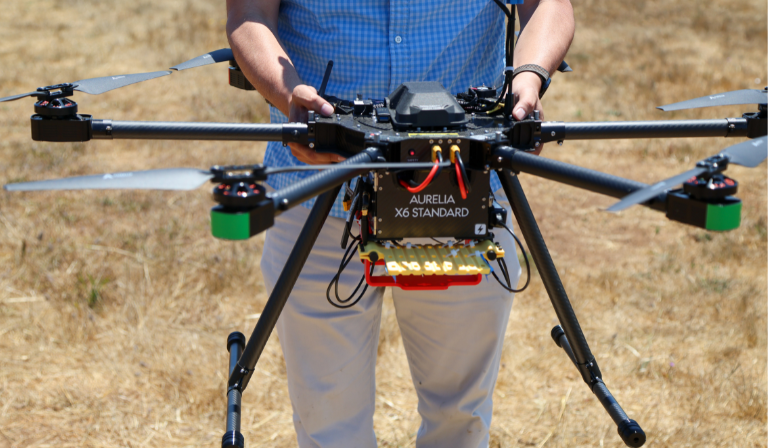
    How can flying robots help us track the air we breathe and the pollutants we can’t see? In this talk, Assistant Professor Javier González-Rocha  will share how his team uses drones to measure wind patterns and detect airborne pollutants in hard-to-reach places.. These systems help us understand how toxic pollutants and climate emissions move through […]

  • AM Seminar: Probing Forced Responses and Causality in Data-Driven Climate Emulators: Conceptual Limitations and the Role of Reduced-Order Models

    Virtual Event

    Presenter: Fabrizio Falasca, New York University Description: A central challenge in climate science and applied mathematics is developing data-driven models of multiscale systems that capture both stationary statistics and responses to external perturbations. Current neural climate emulators aim to resolve the atmosphere–ocean system in all its complexity but often struggle to reproduce forced responses, limiting […]

  • AM Seminar: Are Graph Learning Methods Actually Learning?

    Presenter: Seshadhri Comandur, Professor of Computer Science, UCSC Description: There has been a lot of literature on graph machine learning over the past few years, and a bewildering array of new methods. This talk is based on a series of results making a provocative argument. Maybe many graph machine learning methods are not really that […]

  • Johnstone, J. (AM) – The Effects of Asymmetry on Overshooting and Magnetic Pumping from Compressible Convection Zones

    Engineering 2 Engineering 2 1156 High Street, Santa Cruz, CA
    Hybrid Event

    We present a comprehensive numerical investigation examining how vertical asymmetry in compressible convection affects overshooting and the transport of large-scale magnetic fields from convective to stably stratified regions. Using three-dimensional direct numerical simulations, we systematically vary the superadiabaticity and stratification of a convective layer to control the vertical asymmetry of the flow and analyze its […]

  • AM Seminar: Data Driven Modeling for Scientific Discovery and Digital Twins

    Presenter: Dongbin Xiu, Professor, Ohio State University Description:We present a data-driven modeling framework for scientific discovery, termed Flow Map Learning (FML). This framework enables the construction of accurate predictive models for complex systems that are not amenable to traditional modeling approaches. By leveraging data and the expressiveness of deep neural networks (DNNs), FML facilitates long-term […]

  • Sambamurthy, A. (AM) – Lazy Diffusion: Resolving Spectral Collapse in Generative Models for Turbulence

    Engineering 2 Engineering 2 1156 High Street, Santa Cruz, CA
    Hybrid Event

    Diffusion-based generative models offer a principled framework for probabilistic forecasting, but we show they suffer from a fundamental spectral collapse when applied to turbulent flows. A Fourier-space analysis of the forward SDE reveals that the mode-wise signal-to-noise ratio decays monotonically in wavenumber for power-law spectra, rendering high-wavenumber content indistinguishable from noise. We reinterpret the noise […]

  • AM Seminar: Multiscale Modeling of Cellular Membranes and Oncogenic Proteins

    Presenter: Liam Stanton, Professor, San Jose State University Description: In this talk, I will present a multiscale model for cellular membranes, which is trained on molecular dynamics simulations. The model is constructed within the formalism of dynamic density functional theory and can be extended to include features such as the presence of proteins and membrane […]

  • Transform Your Future Pop-Up (Cookies Included!)

    Jack Baskin Engineering Baskin Engineering 1156 High Street, Santa Cruz, CA

    Join Baskin Engineering to celebrate National Engineers Week with a sweet stop at the Transform Your Future Pop-Up (Cookies Included!) 🍪☕ This year’s Engineers Week theme, Transform Your Future, is a powerful reminder that engineering doesn’t just shape our world—it shapes our opportunities, our communities, and the futures we can imagine for ourselves. Swing by […]

  • Exploring Research Pathways at Baskin Engineering

    Engineering 2 Engineering 2 1156 High Street, Santa Cruz, CA

    Curious how being part of a research lab can supercharge your experience as a Baskin Engineer?   Join us for this informative event to learn about opportunities to solve open-ended problems, build deeper technical skills, and learn how to think like an engineer. We’ll kick things off with a quick overview of the kinds of research […]

  • BE Club Bash – Engineers Week

    Jack Baskin Engineering Baskin Engineering 1156 High Street, Santa Cruz, CA

    Discover innovation at the Baskin Engineering Club Bash, an event celebrating National Engineers Week! Mark your calendars for Thursday, February 26, 12–2 PM in the BE Courtyard! The BE Club Bash brings together student organizations across all engineering disciplines to showcase their projects, demos, and interactive activities. Stop by to: Explore hands-on booths and demonstrations from student organizations Learn about engineering opportunities on […]

  • AM Seminar: The Evolving Landscape of AI for Science and Engineering: Bridging Simulation, Experiment, and Multi-scale Dynamics

    Presenter: Aditi Krishnapriyan, Assistant Professor, UC Berkeley Description: Recent advances in large-scale scientific datasets are creating new opportunities for machine learning (ML) methods to more effectively capture scientific phenomena with greater accuracy and reach. In this talk, I will discuss how these advances are both shifting ML design paradigms and enabling new scientific inquiries. This […]

  • AM Seminar: Solution Discovery in Fluids with High Precision Using Neural Networks

    Presenter: Ching-Yao Lai, Assistant Professor, Stanford University Description: I will discuss examples utilizing neural networks (NNs) to find solutions to partial differential equations (PDEs) that facilitate new discoveries. Despite being deemed universal function approximators, neural networks, in practice, struggle to fit functions with sufficient accuracy for rigorous analysis. Here, we developed multi-stage neural networks (Wang […]