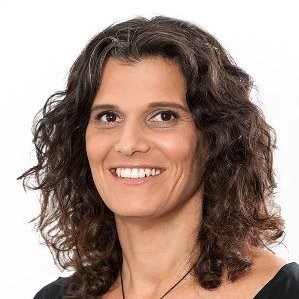
Applied Microeconomics and Trade Seminar Series Presents: Olivia Bordeu
Engineering 2 Engineering 2 1156 High Street, Santa Cruz, CAApplied Microeconomics and Trade Seminar: Olivia Bordeu
Applied Microeconomics and Trade Seminar: Olivia Bordeu
While Large Language Models exhibit remarkable capabilities, their reliance on the standard Transformer architecture imposes prohibitive computational costs and quadratic memory complexity. To bridge the gap between biological efficiency and high-performance AI, we have established foundational work in linearizing attention and maximizing hardware utilization through architectures such as RWKV and MatMul-Free networks. Addressing the remaining […]
Transient execution attacks are serious security threats in modern-day processors. Out-of-order execution compels the processor to access data that should not be otherwise perceived. Leakage of that secret information creates a covert channel for the attacker for various types of transient and speculative attacks. Transient based execution attacks emanate when the secret information is leaked […]
Presenter: Andrew Myers, Cornell University Abstract: Modern civilization depends on complex, interconnected software systems that must safeguard trustworthy or private data. We have ever-growing mountains of code yet lack principled ways to build large systems that are secure. What is missing is a way to securely build these systems compositionally: module by module and layer […]
Modern applications, such as data center workloads, have become increasingly complex. These applications primarily operate on massive datasets, which involve large memory footprints, irregular access patterns, and complex control and data flows. The processor-memory speed gap, combined with these complexities, can lead to unexpected performance inefficiencies in these applications, preventing them from achieving optimal performance. […]
Hardware design flows have become increasingly complex as modern chips integrate billions of transistors and rely on aggressive synthesis optimizations to meet performance, area, and power targets. While these transformations improve circuit efficiency, they also erase the correspondence between gate-level netlists and their originating HDL source lines. The loss of traceability makes post-synthesis debugging, timing […]
In this work, we develop numerical methods for conservation laws that explore statistical, structure-preserving, and machine-learning-based approaches, each built on top of traditional numerical solvers. First, we develop a general Gaussian-process-based “recipe’’ for constructing high-order linear operators such as interpolation, reconstruction, and derivative approximations. Building on this recipe, we derive a kernel-agnostic convergence theory for […]
Presenter: Suresh Jagganathan, Purdue University Abstract: Unlike program verifiers, symbolic execution and property-based testing tools underapproximate program behavior: they aim to report only real bugs (no false positives), at the cost of potentially missing some (false negatives). Recent work has sought to place such tools on a more formal footing, primarily through the development of incorrectness […]
Miniaturized spectrometers have the potential to replace bulky and expensive benchtop models. We have previously demonstrated a multimode interference (MMI) waveguide-based spectrometer that achieves high performance while minimizing its footprint. In this talk, the integration of the MMI spectrometer into an optofluidic device is proposed. This integration opens up applications such as the detection of […]
One of the central challenges in quantum computing is finding or approximating the ground-state energy of a local Hamiltonian, a quantum analogue of classical constraint satisfaction problems (CSPs). Among these, the Quantum Max-Cut problem serves as a canonical example, paralleling the classical Max-Cut problem. Despite its foundational importance in both theoretical computer science and condensed […]
Presenter: Ranjit Jhala, UCSD Abstract: Rust has risen as a language of choice for new systems code — from OS kernels to hypervisors, firmware and run-times — as it is memory safe and provides the sort of abstractions needed for efficient low-level systems implementation. We present Flux, a refinement type checker for Rust that shows how […]
Presented by: Linda Hirsch Description: “Games and playful interventions have been researched to increase awareness of climate change impacts and educate about mitigation and adaptation measures. However, besides increased […]
Presenter: Luis Lamb, Catholic Institute of Technology Abstract: Neurosymbolic AI brings together the statistical nature of machine learning with the formal reasoning capabilities of symbolic AI. It seeks to offer a balanced approach to contemporary AI technologies, by combining the ability to learn from data, with the capacity to reason upon knowledge acquired from an environment. […]
Presenter: Roozbeh Mottaghi, University of Washington Abstract: Data has revolutionized progress across AI fields like natural language processing and computer vision. Yet, in robotics, data collection remains a significant challenge: robots must interact with complex, dynamic environments, making the process slow, costly, and difficult to scale. In this talk, I will discuss how simulation is […]
Presented by: Chaim Gingold Description: As play is intrinsic to humanity, it should come as no surprise that the history of computing is veined with playful simulations and games of all kinds. From the Balinese cockfight to Los Alamos’s Monte Carlo simulations, play and games, in all their kaleidoscopic glory, reflect the diverse […]
Speaker: Sina Nordhoff, Postdoctoral Researcher, Institute of Transportation Studies at UC Davis. Title: Human Acceptance of Autonomous Systems. Time: Thursday, Oct 30th, 2025, 2:00-3:00 pm. Location: E2-506 or Zoom. Abstract: This seminar explores how society engages with autonomous transportation systems, focusing on automated vehicles and Advanced Air Mobility (AAM). Dr. Sina Nordhoff will present research […]
Are you interested in funding for research, collaboration, and travel opportunities in Japan? Representatives from the Japan Society for the Promotion of Science (JSPS) will be on campus for an in-person info session: When: Wednesday, October 29, 2025 | 1:30 p.m. – 2:30 p.m. Where: Engineering Building 2, Room 180 (E2-180) Light refreshments provided. Please RSVP here Who should attend? Faculty, researchers/postdocs, students in ALL disciplines. This information session is particularly relevant for: Faculty fellowships at […]
Speaker: Koushik Sen, UC Berkeley and Google DeepMind Abstract: Coding has emerged as an important application area for large language models (LLMs), with a proliferation of code-specific models and their applications across various domains and tasks such as program repair, performance optimization, debugging, test generation, documentation, and security hardening. In this talk, I will describe […]
Presenter: Jason Yik, PhD Candidate, Harvard SEAS Description: Recent research on neuromorphic accelerators has investigated their efficiency and performance benefits for machine learning (ML) inference at the edge. This talk will focus on the performance implications of the fully-on-chip, manycore-distributed memory architecture used by current neuromorphic accelerators. In conventional architectures, the roofline model is a […]
Join us for an afternoon of creating and editing pages for BIPOC scientists, engineers, and technologists! Wikipedia overwhelmingly recognizes the achievements of white people. This wiki-a-thon works to reverse this […]