
- This event has passed.
AM Seminar: Using Math and Experiments to Study the Control of Cell Metabolism
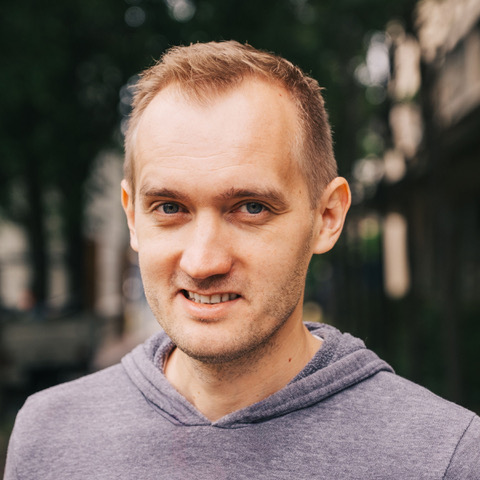
Presenter: Denis Titov, Assistant Professor, University of California, Berkeley
Description: Cells run thousands of chemical reactions simultaneously, and these reactions must be precisely controlled—like a thermostat that prevents overheating. When this control fails, diseases including diabetes, cardiovascular disease, and fatty liver disease result. One key control mechanism is allosteric regulation, where a small molecule binds to an enzyme and changes its activity. Allosteric regulation is among the most conserved features of cellular life, yet the functions it serves remain one of the oldest unsolved problems in biology. Several roles have been proposed, but since the discovery of allostery in the 1950s, no one has systematically disabled it in metabolic enzymes and measured the consequences. Four technological advances now converge to make this possible. CRISPR enables precise genome editing of allosteric sites. Structural biology has mapped which residues to target. LC-MS metabolomics makes metabolic phenotyping routine. The speed of modern computers enables detailed modeling of allosteric regulator function. In this talk, I will describe our work developing and testing the first-in-class biophysical model of a metabolic pathway that accurately predicts responses to the addition or removal of allosteric regulators. Our work provides a framework for developing predictive models of cell metabolism that can be used for drug development or for engineering cells for energy production and chemical synthesis. Within a decade, we plan to develop a model that accurately predicts metabolic activity in any human cell type under any condition.
About the speaker: Denis Titov is an Assistant Professor at the University of California Berkeley with joint appointments in the Department of Metabolic Biology and Nutrition, Department of Molecular and Cell Biology, and Center for Computational Biology. Dr. Titov’s long-term research dream is to improve the understanding of human metabolic pathway regulation to a point where we can accurately predict metabolic pathway activity in any cell type, under any condition, and in response to any perturbation. Dr. Titov is interested in the following broad questions: How does metabolic homeostasis emerge from the activities of individual enzymes? What trade-offs drove the evolution of specific metabolic pathways and their control mechanisms? How to effectively combine data and biophysical models to simulate metabolic pathways? To tackle these questions, Titov lab is using a combination of biochemistry, mathematical modeling, physiology, custom instrumentation, and genetically encoded tool development to study metabolism in mammalian cells and reconstituted biochemical systems.
This seminar is hosted by Professor Nilah Ioannidis.