
Statistics Seminar: Randomization Posteriors and Generalized Bayesian Inference
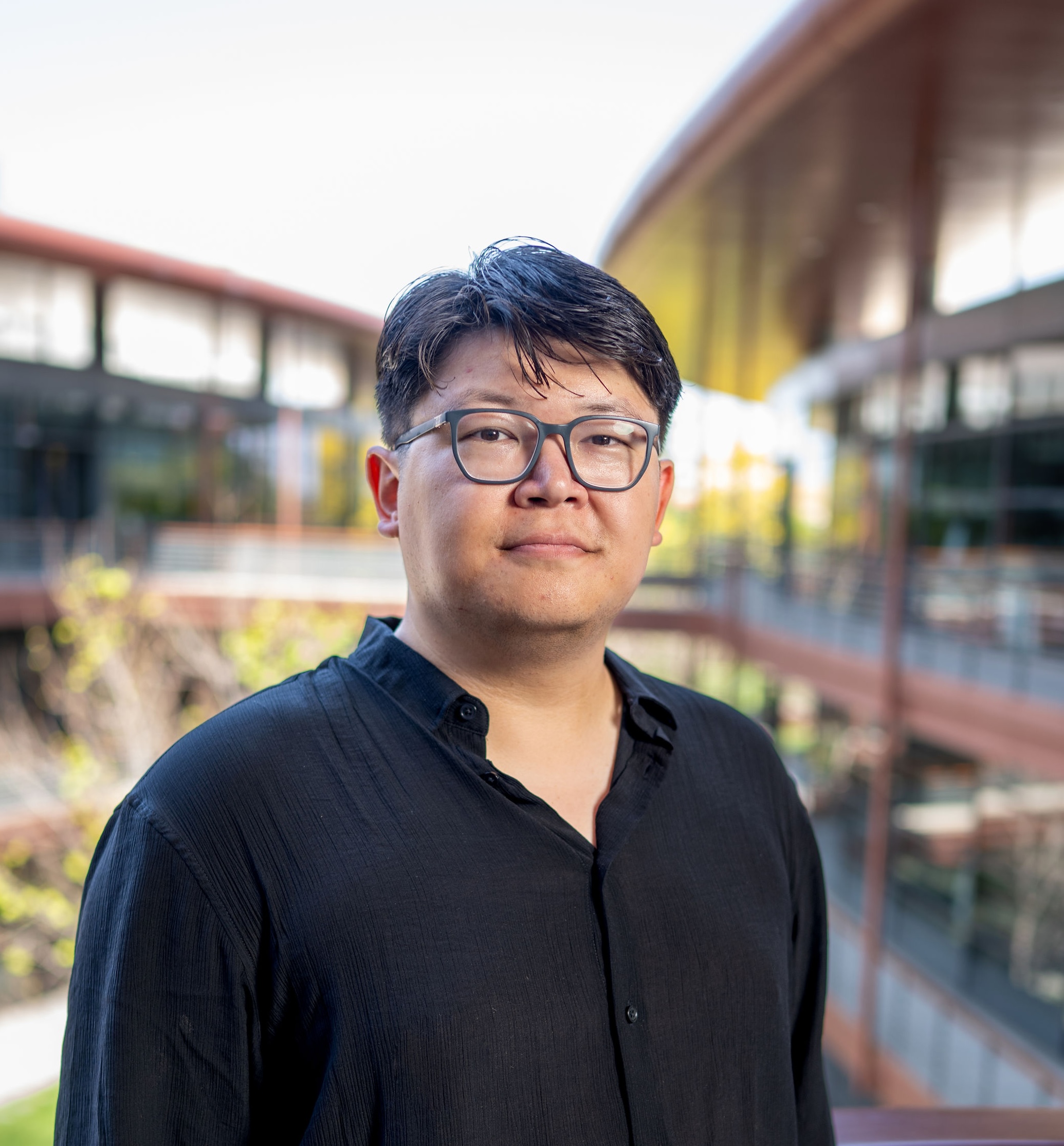
Presenter: Edric Tam, Warren Alpert Fellow in AI and Computational Biology, Department of Biomedical Data Science, Stanford University
Description: A longstanding question in Bayesian analysis concerns the role of randomization. We introduce randomization posteriors, a class of generalized Bayesian updates obtained by averaging over an auxiliary randomization law. A particularly relevant instance assigns random weights to the log-likelihood contributions of individual observations, thereby averaging inference over random perturbations of the dataset. The resulting posterior updates are governed by a fundamental design choice: the stage at which the randomization is averaged out. Averaging at the log-likelihood level recovers the power posterior for a broad class of weight distributions, while averaging at the posterior level, under suitable choices of weights, recovers the bagged posterior. Averaging at the likelihood level yields a new family of generalized Bayesian updates, which we term contamination posteriors. These are indexed by the cumulant transform of the randomization law and require a reference density for well-posedness. For Bernoulli weights, they recover classical Huber-type contamination models, while Beta and other weight distributions produce new generalized posteriors. We characterize the theoretical properties of randomization posteriors and illustrate their empirical robustness through simulations and experiments. We also discuss connections with bootstrap methods, coarsened posteriors, and other generalized Bayesian updating procedures.
About the speaker: Edric (Ed) Tam is a postdoctoral fellow at the Department of Biomedical Data Science in Stanford University. His research lies at the intersection of Bayesian statistics, artificial intelligence, and biomedical applications. His postdoctoral work has been supported by a Warren Alpert Fellowship and a Croucher Postdoctoral Fellowship. He earned his PhD in Statistical Science from Duke University, where he worked with David Dunson, and holds degrees in computer science and biomedical engineering from the University of Chicago, Yale University, and Johns Hopkins University. He has also held research and engineering roles at Google, Meta, Amazon, and Apple AIML.
This seminar is hosted by Professor Yunyi Shen.