• Optional Practical Training (OPT) Awareness Week

    Join us for OPT Awareness Week at UC Santa Cruz, a supportive and informative series designed to help international students learn about and confidently prepare for Optional Practical Training. You’ll learn application steps, key timelines, and employment rules while connecting with advisors and peers who are here to help you succeed. Whether you’re just starting to explore […]


  • ECE 290 Seminar: Precision Nuclear Medicine: Engineering Solutions from Acquisition to Analysis

    Engineering 2 Engineering 2 1156 High Street, Santa Cruz, CA

    Presenter: Spencer L. Bowen, Assistant Professor in the Departments of Radiology and Biomedical Engineering, UT Southwestern Medical Center Description: The Bowen Lab focuses on the development of tools for positron emission tomography (PET) and hybrid systems (e.g. PET/CT), to advance precision imaging for the care and study of oncology, neurology, and cardiology patients. Quantitative metrics […]

  • CM Seminar – “From Sibelius to Game: Crafting Adaptive Music for ‘Kingdom Come: Deliverance’”

    Silicon Valley Campus 3175 Bowers Avenue, Santa Clara, CA, United States

    Presented by: Adam Sporka Description: “This talk explores the technical and creative processes behind the music of Kingdom Come: Deliverance II, where I served as a music programmer, and soundtrack contributor. Using our proprietary Sequence Music Engine and music logic module, we authentically scored the game’s 1400s Bohemia setting with segment-based adaptive music driven by in-game variables. […]

  • Statistics Seminar: Decoding Phytoplankton Responses to a Changing Ocean

    Presenter: Francois Ribalet, Research Associate Professor, School of Oceanography, University of Washington Description: François Ribalet will present new observational technologies and computational approaches for studying phytoplankton responses to ocean warming. Using SeaFlow, a custom-built automated flow cytometer deployed on over 100 research cruises, his team has collected nearly 850 billion cell measurements across global oceans. […]

  • AM Seminar: The Evolving Landscape of AI for Science and Engineering: Bridging Simulation, Experiment, and Multi-scale Dynamics

    Presenter: Aditi Krishnapriyan, Assistant Professor, UC Berkeley Description: Recent advances in large-scale scientific datasets are creating new opportunities for machine learning (ML) methods to more effectively capture scientific phenomena with greater accuracy and reach. In this talk, I will discuss how these advances are both shifting ML design paradigms and enabling new scientific inquiries. This […]

  • CSE Colloquium – Improving Efficiency and Reliability of Foundation Models in Clinical AI

    Engineering 2 Engineering 2 1156 High Street, Santa Cruz, CA

    Presenter: Vasiliki “Vicky” Bikia, PhD, Stanford Department of Biomedical Data Science and Institute for Human-Centered AI (HAI) Abstract: Deploying foundation models in health requires both computational efficiency and reliable generation. In this talk, I present two studies that address these dimensions separately but with a shared goal of real-world clinical deployment. The first study focuses on […]

    Free
  • Shields, S. (CM) – Procedural, Player-Centric Game Balancing

    Merrill College College Office, Santa Cruz, CA
    Hybrid Event

    Game balance is a term widely used among players, researchers, and designers of games. It is a concept that feels vitally important to how we make and play games – […]

  • Science in the Neighborhood: Transforming Pacific salmon recovery, from genes to ecosystems

    Science in the Neighborhood
    Coastal Biology Building 130 McAllister Way, Santa Cruz, CA

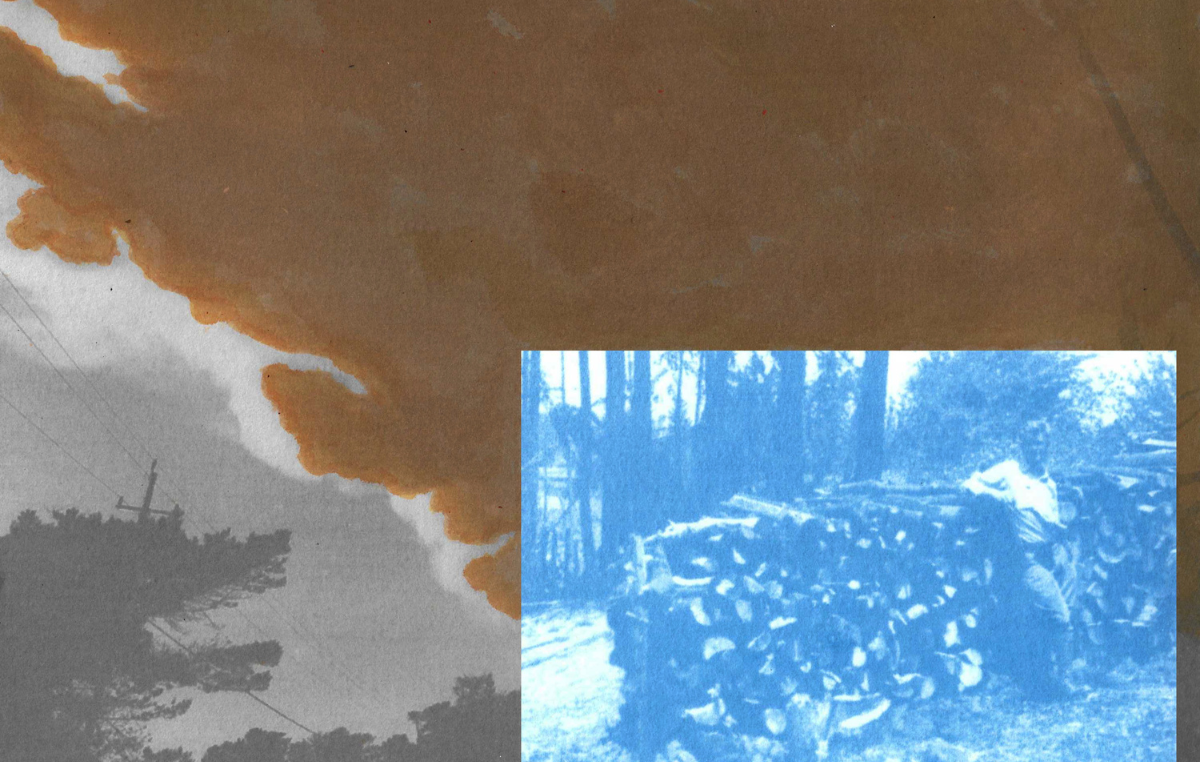
    For millennia, Pacific salmon have been integral to the health of coastal ecosystems and human communities from California to Alaska. Salmon are ecological and cultural keystone species, connecting marine and freshwater food webs and supporting thriving fisheries. Yet, wild salmon have declined precipitously due to a combination of factors including dams, harvest, hatcheries, water use—and now, climate change. This is part of the Science in the Neighborhood lecture series.

    Free
  • Hendawy, M. (CM) – Autonoming Child Online Safety in the Age of AI: From Control to Digital Co-Agency Across Cultures

    Virtual Event

    Children’s lives are now inextricably linked with AI-driven digital systems that shape learning, social interaction, and development. This has elevated child online safety to a central concern for families, policymakers, and educators. This makes Child online safety a wicked socio-technical problem, emerging from the complex interplay of social norms, platform incentives, cultural expectations, and rapidly […]

  • Statistics Seminar: Evaluating Predictive Algorithms Under Missing Data

    Presenter: Amanda Coston, Assistant Professor, University of California Berkeley Description: Performance evaluation plays a central role in decisions about whether and how predictive algorithms should be deployed in high-stakes settings. Yet, in many real-world domains, evaluation is fundamentally difficult: the data available for assessment are often biased, incomplete, or noisy, and the act of deploying […]

  • Robbins, A. (ECE) – How to train your organoid: goal-directed learning in biological neural networks

    Hybrid Event

    Artificial neural networks can now learn to play games, control robots, generate language, and solve complicated reasoning tasks, yet we still lack a clear understanding of how to directly guide learning in biological neural networks. We show that brain organoids can learn to solve a fundamental control task, balancing an inverted pendulum, through closed-loop electrophysiology. […]

  • ECE 290 Seminar: Dynamical Signatures: Harnessing the Hidden Language of In-Space Electric Propulsion

    Engineering 2 Engineering 2 1156 High Street, Santa Cruz, CA

    Presenter: Dr. Christine Greve, Research Engineer,  Edwards AFB Description: Low-thrust space electric propulsion systems offer long propulsion system lifetimes for satellite maintenance maneuvers. These thrusters operate by generating and accelerating plasmas, making the thrusters throttleable, propellant-efficient, and scalable from low-to-high power operations. This talk will focus on efforts to leverage the underlying time-dependent dynamics of […]

  • Harrison, D. (CS) – Multi-Level Control in Neural Dialogue Generation: Style, Semantics, and Selection through Over-Generation and Ranking

    End-to-end neural generation models have largely displaced the modular architectures that once gave dialogue system designers explicit control over what is said and how it is said. While these models produce fluent text, they collapse content planning, sentence planning, and surface realization into a single undifferentiated decoding step, sacrificing the controllable structure that earlier systems […]

  • AM Seminar: Solution Discovery in Fluids with High Precision Using Neural Networks

    Presenter: Ching-Yao Lai, Assistant Professor, Stanford University Description: I will discuss examples utilizing neural networks (NNs) to find solutions to partial differential equations (PDEs) that facilitate new discoveries. Despite being deemed universal function approximators, neural networks, in practice, struggle to fit functions with sufficient accuracy for rigorous analysis. Here, we developed multi-stage neural networks (Wang […]