• Ticknor, B. (STAT) – Clustering and Tractable Multivariate Inference for Extremes

    Engineering 2 Engineering 2 1156 High Street, Santa Cruz, CA
    Hybrid Event

    Modeling environmental extremes often involves large collections of spatial or temporal records where both clustering similar series and modeling dependence among extremes are challenging tasks. This Ph.D. proposal addresses several related problems in extreme value analysis. In particular, we study how to cluster many time series based on their extremal behavior using strategies defined via […]

  • 2026 Right Livelihood International Conference

    Hybrid Event

    The Right Livelihood International Conference is a five-week global conference exploring how education can strengthen democracy, collective intelligence, and just futures. Bringing together Right Livelihood Laureates, students, faculty, and community partners […]

  • Castello, J. (CSE) – Space Mission Simulation From the Outside In

    Engineering 2 Engineering 2 1156 High Street, Santa Cruz, CA
    Hybrid Event

    Robotic space missions often use discrete event simulation to reduce risk in operation. A simulation applies a set of planned activities to a model of mission resources, and the model’s observed behavior is used to predict real-world outcomes. However, logically concurrent activities are typically simulated under one possible linearization of their events – an order […]

  • Mirchandani, C. (BMEB) – Population and Evolutionary Genomics Across Ecological Scales

    Engineering 2 Engineering 2 1156 High Street, Santa Cruz, CA
    Hybrid Event

    Sequencing technologies have transformed population and evolutionary genetics, making it possible to ask questions at scales that were intractable a decade ago. Realizing that potential depends on tailored computational approaches, and on the tools and infrastructure those approaches are built on. My dissertation works across this spectrum. Using an in vitro Drosophila cell culture system, […]

  • Pawl, E. (STAT) – Flexible and Scalable Mixtures of Experts for Oceanographic Flow Cytometry Data

    Engineering 2 Engineering 2 1156 High Street, Santa Cruz, CA
    Hybrid Event

    Flow cytometry is a valuable technique in microbial research used to measure the optical properties of single-celled organisms at high throughput. Oceanographers often deploy flow cytometers on research cruises in order to study the characteristics of phytosynthetic microbes—called phytoplankton—in regions and times with diverse environmental conditions. Because cytometers cannot distinguish between subpopulations, researchers typically cluster […]

  • Zheng, Z. (STATS) – Semi-Supervised Statistical Learning for Oceanographic Data

    Engineering 2 Engineering 2 1156 High Street, Santa Cruz, CA
    Hybrid Event

    Oceanographic data, generated by modern technologies that measure biological systems across time, space, and cell populations, are often rich, high-dimensional, and highly heterogeneous. Such data provide valuable opportunities to study subcellular organization, cellular heterogeneity, and dynamic biological processes in marine environments. However, because marine plankton systems remain relatively understudied and less well characterized than many […]

  • Wang, Q. (STAT) – Modern Statistical Methods for Modeling Spatial and Temporal Processes

    Jack Baskin Engineering Baskin Engineering 1156 High Street, Santa Cruz, CA
    Hybrid Event

    Modern scientific studies increasingly rely on complex datasets exhibiting spatial and temporal dependence, particularly in social, environmental, and climate applications. This dissertation develops statistical models and computational methods for analyzing such data, with an emphasis on capturing dependence structures, nonlinear dynamics, and uncertainty quantification. A spatial deep learning framework is developed to extend classical geostatistical […]

  • Johns, M. (CMPM) – Playing Together in a Co-Designed Future: Building Resilience Through Community-Centered Gameful Design

    Engineering 2 Engineering 2 1156 High Street, Santa Cruz, CA
    Hybrid Event

    Complex societal problems (e.g. wicked problems) such as those brought on by climate change can be addressed through a combination of Research through Design (RtD), co-design, and Serious Games (SG) by inviting affected communities to take part in developing iterative, experimental solutions and exploring their potential impact. In the course of my research, I have […]

  • Chen, Q. (CSE) – New Approximation and Online Algorithms using Novel Combinatorial Structures

    Engineering 2 Engineering 2 1156 High Street, Santa Cruz, CA
    Hybrid Event

    Most optimization problems face the challenge of computing an optimum solution requiring superpolynomial time. In particular, they are classified as NP-hard problems that have no polynomial-time algorithm to date. Instead, computer scientists turn to find an approximate solution and create numerous elegant algorithms. However, in the modern era, computational environments have changed drastically, and we […]

  • Ehrlich, D. (CM) – Designing Open Microscopy Tools for Neuroscience Research

    Virtual Event

    Advances in microscopy have transformed our understanding of biological systems, yet the high cost and limited accessibility of commercial imaging platforms continue to re- strict their use in many research settings. This thesis presents the design and development of open hardware microscopy tools for neuroscience research, with a focus on integrating user- centered design principles […]

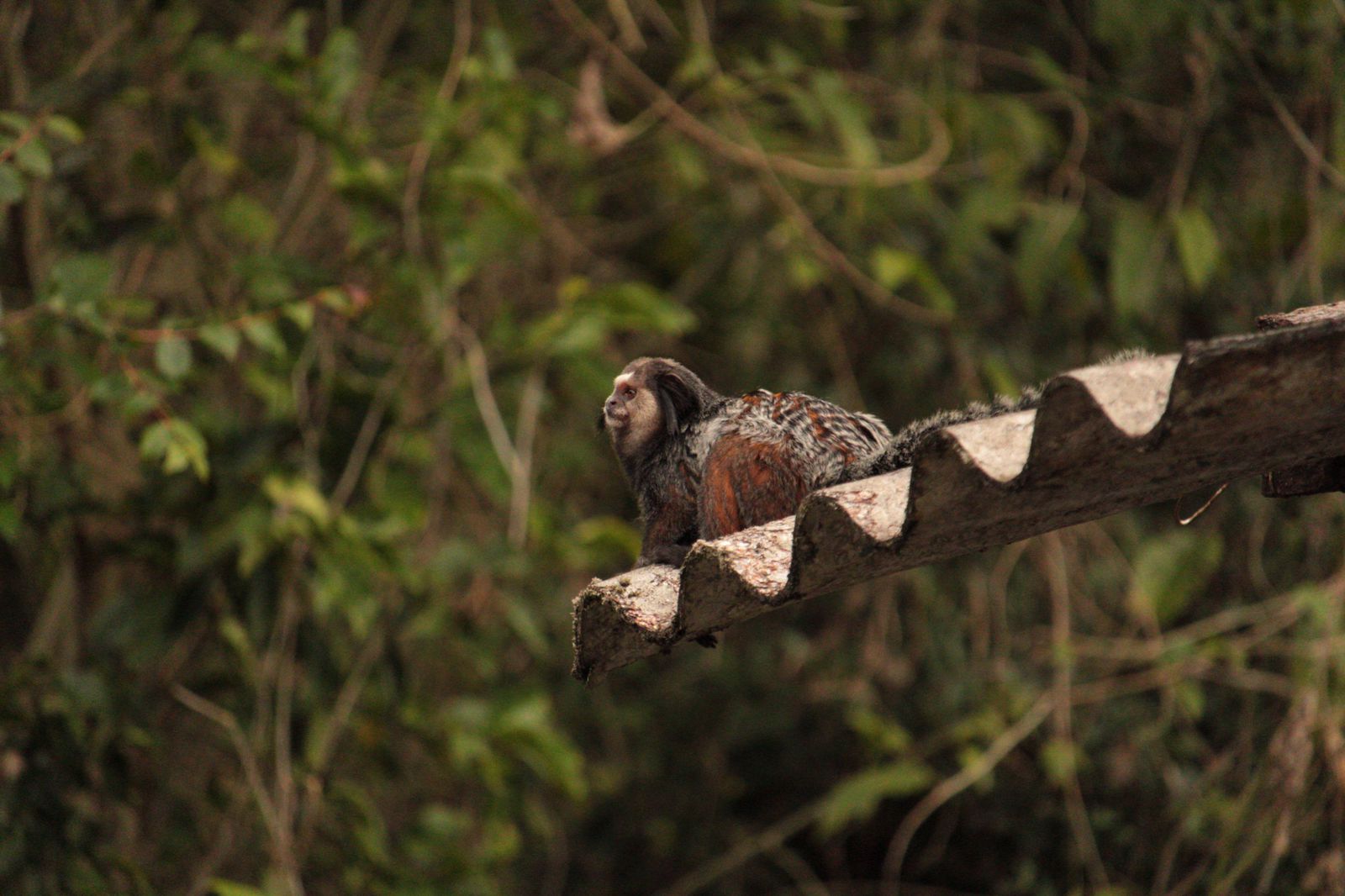
  • Between Forest and City: Stable Isotope Evidence for Anthropogenic Impacts on the Dietary Ecology of the Vulnerable Wied’s Marmosets in Brazil

    Social Sciences 1 Social Sciences 1, Santa Cruz, CA

    Please join us for an Archaeology/Biological Anthropology Lunch Talk on May 13th at noon in SocSci1, Rm 261. Visiting PhD scholar Letícia Soto da Costa will present “Between Forest and City: Stable Isotope Evidence for Anthropogenic Impacts on the Dietary Ecology of the Vulnerable Wied’s Marmosets in Brazil.”

  • Zheng, K. (CSE) – Towards Generalist Embodied World Models: From Neuro-Symbolic Interaction to Self-Evolving 3D World Generation

    Virtual Event

    Artificial intelligence is moving beyond passive perception toward systems that can understand, interact with, and generate the world. This dissertation studies generalist embodied world models that connect language, vision, action, and 3D scene representations. It explores how multimodal systems can ground human instructions in physical environments, reason over long-horizon tasks, generate coherent text-and-visual content, and […]

  • Shadmon, R. (CS) – Proximal Byzantine Agreement

    Engineering 2 Engineering 2 1156 High Street, Santa Cruz, CA
    Hybrid Event

    Research on fault-tolerance protocols for approximate Byzantine agreement (ABA) has largely focused on ensuring that distributed processes remain consistent despite fewer than 1/3 faulty processes. Yet in many real systems, consistency is only useful when it enables processes to make accurate decisions from replicated, noisy, and potentially adversarially corrupted data relative to an ideal fault-free […]

  • Paul Pena, D. (CSE) – Efficient Pattern Counting in Sparse Graphs and Hypergraphs

    Engineering 2 Engineering 2 1156 High Street, Santa Cruz, CA
    Hybrid Event

    Pattern counting is a fundamental problem in computer science with applications in many domains. For a fixed small pattern H, we are given a large graph G and we are asked to count the number of subgraphs or homomorphisms (edge-preserving maps) of H in G. For practical applications where the input graph can be very […]

  • Bai, G. (BMEB) – Long-read single-molecule chromatin architecture and its role in transcriptome regulation

    Biomedical Sciences Building 575 McLaughlin Drive
    Hybrid Event

    Sequencing technologies have revolutionized our understanding of biology, yet many existing methods require fragmentation of DNA or RNA, fundamentally limiting our ability to study these molecules in their native, intact forms. Long-read sequencing overcomes this constraint by enabling the sequencing of long, single-molecule native DNA and RNA, providing simultaneous access to both sequence and base […]

  • Maram, S. (CM) – Scripture To Console: The Nexus between Religion and Digital Play

    Virtual Event

    Religion has historically been a profound force for global mobilization, shaping geopolitics, economies, and geography. Similarly, contemporary interactive media, with video games at the forefront, has moved beyond mere entertainment to become a powerful vehicle for communication, narrative, and inspiration, reaching millions worldwide. This dissertation investigates the intersection of these two influential forces: religion and […]

  • Lucas, J. (BMEB) – Enabling Population-Scale Analysis of Human Centromere Diversity

    Engineering 2 Engineering 2 1156 High Street, Santa Cruz, CA
    Hybrid Event

    Centromeric DNA is critical for accurate chromosome segregation and genome stability, but due to its repetitive nature, it was only recently fully included in a human reference. Rapid evolution and sequence diversity in these regions limit the utility of one reference sequence, however. Integrating centromeric and pericentromeric satellite DNA – which together constitute over 5% […]

  • Chou, Y. (CM) – Exploring Future AI-Mediated Health Creator–Audience Interactions on Social Media: Transparency, Care, and Accountability

    Virtual Event

    Health and wellness content creators play an important role in shaping how people receive and engage with health information on social media. Beyond delivering information, they also convey care, build trust, and sustain relationships with audiences. As generative AI (GenAI) becomes increasingly integrated into creator work, existing research has examined AI disclosure, AI-mediated communication, and […]

  • Weber, Z. (ECE) – Sustainable Bioinspired Polymer–Mineral Composites for Adaptable Repair in Conservation Applications

    Jack Baskin Engineering Baskin Engineering 1156 High Street, Santa Cruz, CA
    Hybrid Event

    Every year, tens of thousands of tons of plaster-based materials are used in restoration and conservation applications, many of which are derived from non-renewable sources and discarded at the end of their service life. Here, we introduce a biodegradable, bio-derived composite based on chitosan and calcium carbonate that is composed of simple, widely available constituents […]