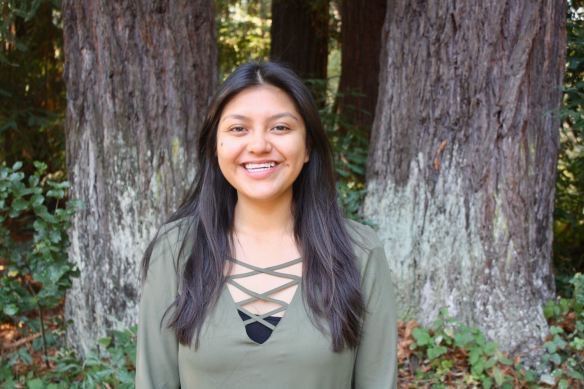
• Chambers, K. (BMEB) – Using Genomics and Artificial Intelligence to improve prognosis for osteosarcoma patients

    Virtual Event

    Transcriptomic profiling has been transformative in pediatric oncology. Pediatric cancers arise from disrupted developmental programs. Their impaired transcriptional states reflect cell lineage infidelity, aberrant differentiation, and immune-microenvironment interactions distinct from those of adult tumors(Gröbner et al., 2018; X. Ma et al., 2018). Within the osteosarcoma (OS) landscape, despite being the most common bone tumor of […]

  • Laffan, N. (CM) – Digital Memory Tools and Their Impact On Collective Remembering

    Virtual Event

    Today, both individual and collective memories are increasingly mediated by digital platforms. Both are fundamentally enmeshed in platform ecosystems that orient around commercial imperatives very much at odds with community cohesion. The digital archive where our mediated memories are stored does not merely store information but actively inscribes it, often privileging narratives aligned with commercial […]

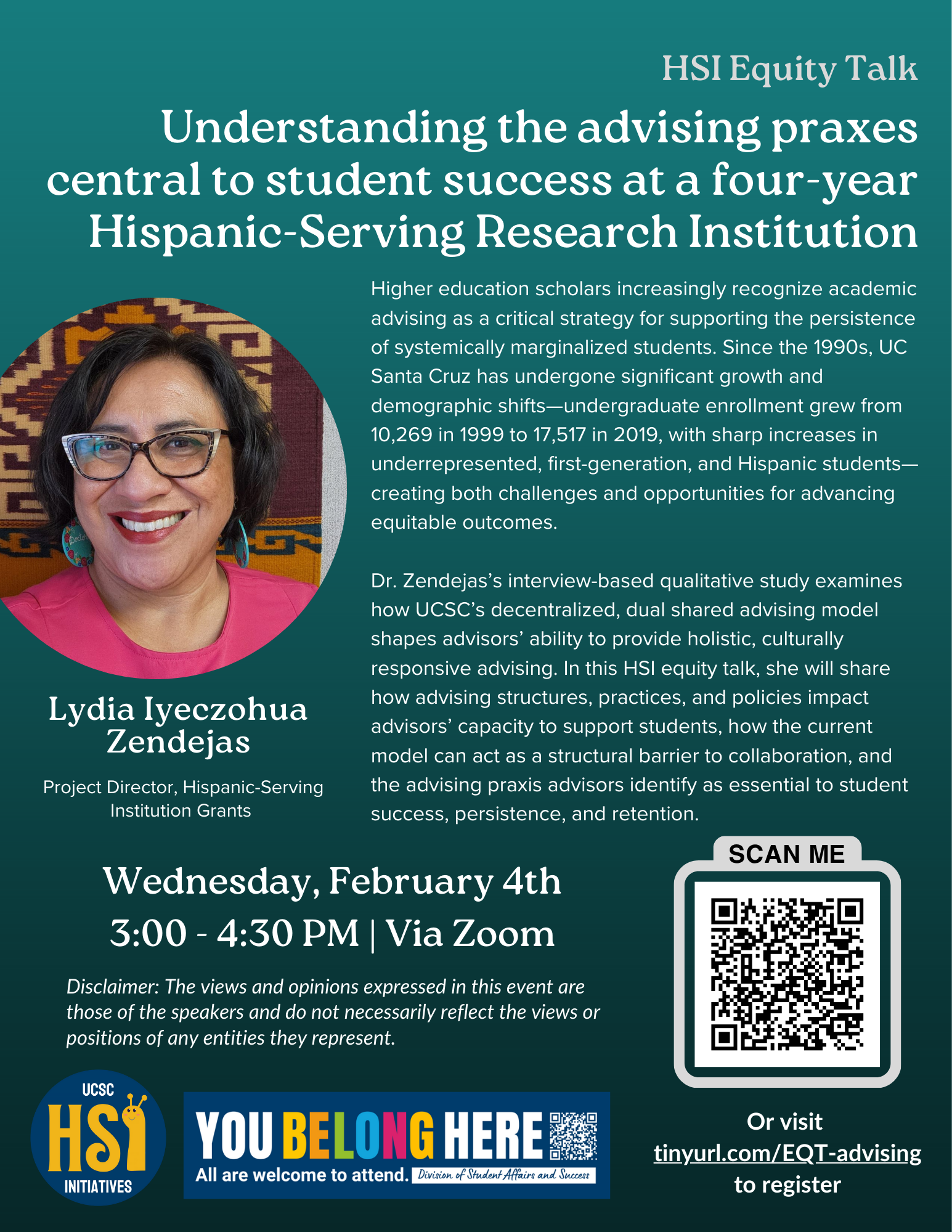
  • HSI Equity Talk

    Title: Understanding the advising praxes central to student success at a four-year Hispanic-Serving Research Institution Presenter: Dr. Lydia Iyeczohua Zendejas Location: Via Zoom (link provided via RSVP) Abstract: Higher education scholars increasingly recognize academic advising as a critical strategy for supporting the persistence of systemically marginalized students. Since the 1990s, UC Santa Cruz has undergone […]

  • Sharma, R. (CSE) – Automatically Evolving GPU Libraries for Performance Portable AI Kernels

    Engineering 2 Engineering 2 1156 High Street, Santa Cruz, CA
    Hybrid Event

    GPUs are the workhorses of modern AI, widely deployed and developed by many vendors including Apple, Qualcomm, Intel, AMD, and NVIDIA. While these GPUs all offer high compute potential, programming them effectively is difficult because they differ in performance-critical features like SIMT width, cache capacity, and memory bandwidth, demanding different optimization strategies. Tunable kernels address […]

  • Johnstone, J. (AM) – The Effects of Asymmetry on Overshooting and Magnetic Pumping from Compressible Convection Zones

    Engineering 2 Engineering 2 1156 High Street, Santa Cruz, CA
    Hybrid Event

    We present a comprehensive numerical investigation examining how vertical asymmetry in compressible convection affects overshooting and the transport of large-scale magnetic fields from convective to stably stratified regions. Using three-dimensional direct numerical simulations, we systematically vary the superadiabaticity and stratification of a convective layer to control the vertical asymmetry of the flow and analyze its […]

  • Yang, J. (CSE) – Towards Controllable and Compositional Generative Vision

    Virtual Event

    Diffusion-based text-to-image models can generate impressive images, but they largely treat an image as a single, flat output, which makes precise editing of individual elements difficult. This proposal studies layered generative representations that align with professional editing workflows, enabling users to manipulate foreground objects while preserving the rest of the scene. A central focus is […]

  • Li, X. (CSE) – Compute-Efficient Scaling of Fully-Open Visual Encoders

    Virtual Event

    Vision encoders have demonstrated significant performance gains in visual generation and multimodal reasoning. These improvements are primarily attributed to the scaling of data, model capacity, and compute. However, this progress is becoming less accessible due to a lack of transparency in data curation and training recipes. In combination with the high compute requirements of foundation-scale […]

  • Centering the Experiences of Undocumented Transfer Students at HSIs: A Brown Bag Presentation by Valeria Alonso Blanco

    Huerta Center Conference Room (Casa Latina) 641 Merrill Rd, Santa Cruz,, CA

      The Huerta Center is proud to present a brown bag presentation by Graduate Student Research Awardee Valeria Alonso Blanco. She will present on a qualitative study that explores how undocumented Latinx transfer students navigate institutional support, belonging, and barriers at a four-year Hispanic Serving Institution (HSI). Findings reveal gaps between institutional commitments and student […]

  • Shields, S. (CM) – Procedural, Player-Centric Game Balancing

    Merrill College College Office, Santa Cruz, CA
    Hybrid Event

    Game balance is a term widely used among players, researchers, and designers of games. It is a concept that feels vitally important to how we make and play games – […]

  • Hendawy, M. (CM) – Autonoming Child Online Safety in the Age of AI: From Control to Digital Co-Agency Across Cultures

    Virtual Event

    Children’s lives are now inextricably linked with AI-driven digital systems that shape learning, social interaction, and development. This has elevated child online safety to a central concern for families, policymakers, and educators. This makes Child online safety a wicked socio-technical problem, emerging from the complex interplay of social norms, platform incentives, cultural expectations, and rapidly […]

  • Robbins, A. (ECE) – How to train your organoid: goal-directed learning in biological neural networks

    Hybrid Event

    Artificial neural networks can now learn to play games, control robots, generate language, and solve complicated reasoning tasks, yet we still lack a clear understanding of how to directly guide learning in biological neural networks. We show that brain organoids can learn to solve a fundamental control task, balancing an inverted pendulum, through closed-loop electrophysiology. […]

  • Mashhadi, N. (CSE) – Compositional, Clinically Conditioned, and Confound-Aware Deep Learning for Alzheimer’s Disease Neuroimaging

    Virtual Event

    Alzheimer’s disease (AD) is a progressive neurodegenerative disorder and a leading cause of dementia. Neuroimaging and clinical biomarkers can reveal early disease changes, but building reliable machine learning models is difficult because data come from different scanners and sites, some modalities are missing, labeled cohorts are limited, and factors such as age and scanner/site effects […]

  • Yang, S. (CSE) – Beyond Image Editing: Building Generalized Image Customization Systems

    Virtual Event

    Current generative vision models struggle with image customization that requires multi-step reasoning or real-world knowledge. This proposal introduces generalized image customization, enabling systems to execute complex, inferential modifications rather than just simple edits. The research focuses on the foundational framework required for this generalization, specifically high-quality training data, scalable evaluation benchmarks, self-improving training paradigms that […]

  • Fan, Y. (CSE) – Building Human-Centered Multimodal AI Agents

    Virtual Event

    As multimodal artificial intelligence systems become increasingly embedded in everyday technology, there is a growing need to design human-centered AI agents that support and amplify human capabilities rather than replace them. This dissertation investigates how to build human-centered multimodal AI agents, framing human-centeredness as an agent-level objective that requires both accessible, assistive interaction and reliable, […]

  • Moghadam, M. (CE) – Constraint-Aware Scene Understanding and Trajectory Generation Using Deep Reinforcement Learning for Autonomous Vehicles

    Engineering 2 Engineering 2 1156 High Street, Santa Cruz, CA
    Hybrid Event

    Advanced driver-assistance systems (ADAS) are commonly organized as modular pipelines that transform raw sensor measurements into low-level actuation commands through perception, planning, and control. While learning-based methods have achieved state-of-the-art performance in perception and environment modeling, the planning layer remains a key bottleneck for reliable autonomy. Highway driving in particular requires long-horizon reasoning and socially […]