• AM Seminar: Solution Discovery in Fluids with High Precision Using Neural Networks

    Presenter: Ching-Yao Lai, Assistant Professor, Stanford University Description: I will discuss examples utilizing neural networks (NNs) to find solutions to partial differential equations (PDEs) that facilitate new discoveries. Despite being deemed universal function approximators, neural networks, in practice, struggle to fit functions with sufficient accuracy for rigorous analysis. Here, we developed multi-stage neural networks (Wang […]

  • Statistics Seminar: Evaluating Predictive Algorithms Under Missing Data

    Presenter: Amanda Coston, Assistant Professor, University of California Berkeley Description: Performance evaluation plays a central role in decisions about whether and how predictive algorithms should be deployed in high-stakes settings. Yet, in many real-world domains, evaluation is fundamentally difficult: the data available for assessment are often biased, incomplete, or noisy, and the act of deploying […]

  • Mashhadi, N. (CSE) – Compositional, Clinically Conditioned, and Confound-Aware Deep Learning for Alzheimer’s Disease Neuroimaging

    Virtual Event

    Alzheimer’s disease (AD) is a progressive neurodegenerative disorder and a leading cause of dementia. Neuroimaging and clinical biomarkers can reveal early disease changes, but building reliable machine learning models is difficult because data come from different scanners and sites, some modalities are missing, labeled cohorts are limited, and factors such as age and scanner/site effects […]

  • CSE Colloquium: Co-Active AI-Assisted Programming

    Engineering 2 Engineering 2 1156 High Street, Santa Cruz, CA

    Presenter: Nadia Polikarpova, UCSD Abstract: AI-assisted programming has rapidly moved from novelty to default. Today, most developers use AI coding tools, and increasingly rely on agentic systems capable of making multi-step […]

    Free
  • Yang, S. (CSE) – Beyond Image Editing: Building Generalized Image Customization Systems

    Virtual Event

    Current generative vision models struggle with image customization that requires multi-step reasoning or real-world knowledge. This proposal introduces generalized image customization, enabling systems to execute complex, inferential modifications rather than just simple edits. The research focuses on the foundational framework required for this generalization, specifically high-quality training data, scalable evaluation benchmarks, self-improving training paradigms that […]

  • BME 280B Seminar: Modulating Insulin Receptor Through New Ligands

    Physical Sciences Building Physical Sciences Building, Santa Cruz, CA

    Presenter: Danny Chou, Associate Professor of Pediatrics, Stanford University Description: Since its discovery in 1921, insulin has been at the forefront of scientific breakthroughs. From its amino acid sequencing to […]

  • Fan, Y. (CSE) – Building Human-Centered Multimodal AI Agents

    Virtual Event

    As multimodal artificial intelligence systems become increasingly embedded in everyday technology, there is a growing need to design human-centered AI agents that support and amplify human capabilities rather than replace them. This dissertation investigates how to build human-centered multimodal AI agents, framing human-centeredness as an agent-level objective that requires both accessible, assistive interaction and reliable, […]

  • Moghadam, M. (CE) – Constraint-Aware Scene Understanding and Trajectory Generation Using Deep Reinforcement Learning for Autonomous Vehicles

    Engineering 2 Engineering 2 1156 High Street, Santa Cruz, CA
    Hybrid Event

    Advanced driver-assistance systems (ADAS) are commonly organized as modular pipelines that transform raw sensor measurements into low-level actuation commands through perception, planning, and control. While learning-based methods have achieved state-of-the-art performance in perception and environment modeling, the planning layer remains a key bottleneck for reliable autonomy. Highway driving in particular requires long-horizon reasoning and socially […]

  • Teng, Z. (CM) – Visualizing Player Processes: Towards Design Guidelines for Interactive Process Visualization Tools in Game Analytics

    Virtual Event

    Game analysts face a significant challenge in understanding problem-solving and decision-making processes from the vast and complex sequential data generated by modern video games. Existing visualization tools often fail to adequately support the exploration, suffering from issues of visual clutter, inflexible cohort construction, and a lack of interactive depth. To address this gap, this dissertation […]

  • The Future of Work in the Age of AI: March Slugs and Steins with Dean PK Agarwal

    Virtual Event

    The Future of Work in the Age of AI: Chaos, Adaptation, or Growth? Artificial intelligence has reignited an old debate: are we approaching mass technological unemployment, or simply the next phase of economic evolution? Public discourse swings between dystopian predictions of human obsolescence and confident assurances that “new jobs will replace old ones.” This lecture […]

  • AM Seminar: Flexible Filaments and Swimming Cups: Just Go with the Flow

    Presenter: Lisa Fauci, Professor, Tulane University Description: The motion of waving or rotating filaments in a fluid environment is a common element in many biological and engineered systems. Examples at the microscale include chains of diatoms moving in the ocean, flagella of individual cells comprising multicellular colonies, as well as engineered nanorobots designed to deliver […]

  • CSE Colloquium – Messages from across the event horizon:  AI Agentic Design for Computer Architecture (and more generalizable learnings)

    Engineering 2 Engineering 2 1156 High Street, Santa Cruz, CA

    Presenter: Christopher Fletcher, UC Berkeley Abstract: It is difficult to escape the hype of agentic coding.  Is the hype real?  Are we still living in ~Summer 2025 — when AI coding would accomplish little more than upset its human supervisor?  Or has a level shift in technology finally arrived? In this talk I will argue the latter.  I will […]

    Free
  • Learn to use the UCSC Genome Browser

    Engineering 2 Engineering 2 1156 High Street, Santa Cruz, CA

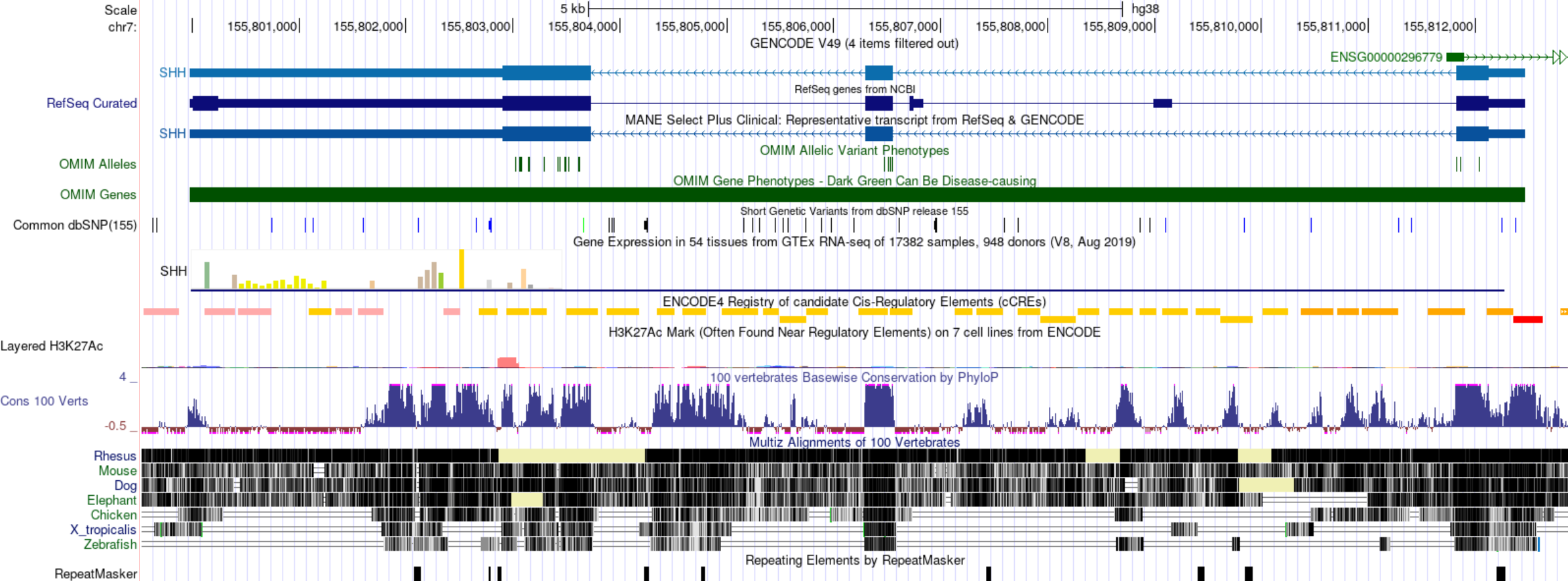
    The UCSC Genome Browser is hosting a free workshop for new and advanced users! Beginner session starts at 9 and will include: How to understand genome annotations How to find annotation data Overview of training resources Intermediate + advanced session starts at 10, covering Custom tracks Track hubs BLAT And more!! Join us and be […]

  • BME 280B Seminar: Small changes, Big consequences: Modulators of Alphavirus Assembly

    Biomedical Sciences Building 575 McLaughlin Drive

    Presenter: Dr. Suchetana (Tuli) Mukhopadhyay, Professor, Indiana University Description: N/A Bio: Suchetana “Tuli” Mukhopadhyay, Ph.D., is a professor in the Department of Biology at Indiana University, Bloomington. She received her B.A. in chemistry from DePauw University and her Ph.D. in chemistry from the University of Illinois at Chicago. Following her doctoral studies, Mukhopadhyay conducted postdoctoral […]

  • BME 80G Seminar: To Infinity and Beyond? Ethical, legal, and social issues of human research in space”

    Jack Baskin Auditorium 191 Baskin Cir, Santa Cruz, CA

    Presenter: Vaso Rahimzadeh, Assistant Professor, Baylor College of Medicine Description: As humans venture farther into outer space, new scientific discovery awaits including in genomics; but so do new ethical dilemmas.  Who bears the risks (and rewards) of space exploration and how should humanity ethically expand beyond our planet? This session will have students think critically […]