
- This event has passed.
Robots that Know What They Do Not Know: Assured AI-enabled Autonomy in Unknown Environments
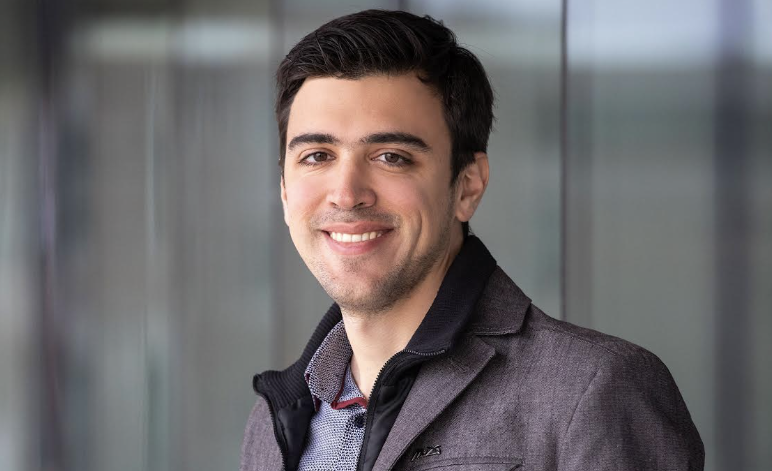
Speaker: Yiannis Kantaros, Assistant Professor, Electrical and Systems Engineering at WashU in St. Louis.
Title: Robots that Know What They Do Not Know: Assured AI-enabled Autonomy in Unknown Environments.
Time: Thursday, Oct 23rd, 2025, 2:00-3:00 pm.
Location: E2-553 or Zoom.
Abstract: Designing robots that navigate unfamiliar environments to execute natural language (NL) commands is a cornerstone of advanced embodied intelligence. While recent AI-enabled architectures have made impressive empirical progress, they often lack introspection, leading to systems that act with unwarranted confidence, unaware of their own limitations or whether they have successfully completed their tasks. As a result, these systems offer limited performance and safety guarantees, restricting their deployment in safety-critical settings.
In this talk, I will present an introspective, neuro-symbolic autonomy architecture that enables robots to complete NL tasks in unknown environments with assurance guarantees by explicitly quantifying their own uncertainty using uncertainty quantification (UQ) tools. The neural component employs large language models (LLMs) to translate NL commands into temporal logic specifications, while leveraging conformal prediction, a UQ tool, to calibrate and quantify prediction uncertainty arising from LLM imperfections and potential NL ambiguity. When uncertainty exceeds user-defined thresholds, uncertainty-aware feedback is solicited from auxiliary LLMs—or, if necessary, from human operators. We provide theoretical guarantees, supported by empirical case studies, that the proposed uncertainty-aware translation framework, called ConformalNL2LTL, achieves user-specified translation success rates under certain distributional settings. The symbolic component generates plans for mobile robots with AI-enabled perception systems to satisfy temporal logic tasks while explicitly reasoning over perceptual and environmental uncertainty. This allows robots to decide when to proceed confidently and when to actively gather additional sensor data, ensuring task completion with the desired probability. Notably, the developed planners are agnostic to specific sensor models or noise characteristics. The talk will conclude with case studies and demonstrations, followed by a discussion of limitations and open problems.
Speaker Bio: Yiannis Kantaros is an Assistant Professor in the Department of Electrical and Systems Engineering, Washington University in St. Louis (WashU), St. Louis, MO, USA. He earned a Diploma in Electrical and Computer Engineering in 2012 from the University of Patras, Greece, and M.Sc. and Ph.D. degrees in Mechanical Engineering from Duke University, Durham, NC, in 2017 and 2018, respectively. Prior to joining WashU, he was a postdoctoral associate in the Department of Computer and Information Science, University of Pennsylvania, Philadelphia, PA. His current research interests include machine learning, distributed control and optimization, and formal methods with applications in robotics. He received the Best Student Paper Award at the 2nd IEEE Global Conference on Signal and Information Processing (GlobalSIP) in 2014 and was a finalist for the Best Multi-Robot Systems Paper at the IEEE International Conference on Robotics and Automation (ICRA) in 2024 and a finalist for the Best Paper Award at the ACM/IEEE International Conference on Cyber-physical Systems (CPSWeek-ICCPS) in 2025. He also received the 2017-18 Outstanding Dissertation Research Award from the Department of Mechanical Engineering and Materials Science at Duke University and a 2024 NSF CAREER Award.