
- This event has passed.
CSE Colloquium – Improving Efficiency and Reliability of Foundation Models in Clinical AI
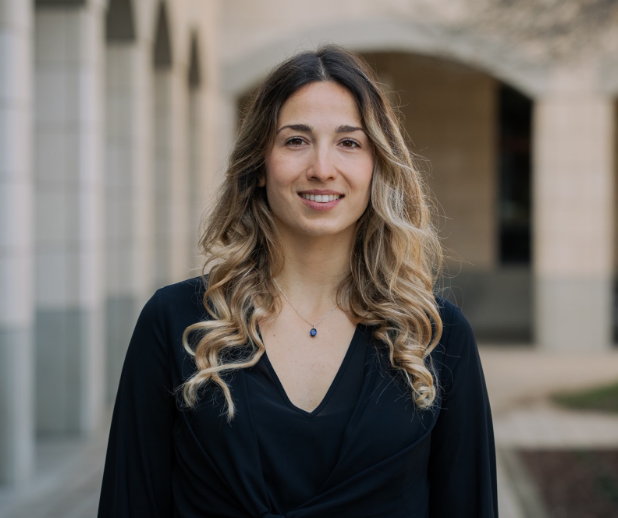
Presenter: Vasiliki “Vicky” Bikia, PhD, Stanford Department of Biomedical Data Science and Institute for Human-Centered AI (HAI)
Abstract:
Deploying foundation models in health requires both computational efficiency and reliable generation. In this talk, I present two studies that address these dimensions separately but with a shared goal of real-world clinical deployment. The first study focuses on reduced-resolution distillation for multimodal clinical data, particularly medical imaging. As model and input sizes increase, inference cost and memory constraints become major barriers to deployment. We investigate how high-capacity teacher models can transfer structured knowledge to compact student models trained on downsampled images, using embedding-space supervision to preserve clinically meaningful representations while reducing computational footprint. The second study examines the reliability of AI-generated clinical text. Foundation models are increasingly used to produce discharge summaries and patient-facing explanations, yet fluency does not guarantee safety. We develop a structured evaluation framework grounded in clinical error taxonomies and clinician-calibrated metrics to quantify hallucinations, omissions, and semantic misalignment. Together, these studies emphasize that scalable clinical AI requires not only smaller and faster models, but also rigorous evaluation of generative reliability before deployment.
Bio:
Vasiliki Bikia is a Postdoctoral Researcher at Stanford University, affiliated with the Department of Biomedical Data Science and the Stanford Institute for Human-Centered Artificial Intelligence (HAI). She received an Advanced Diploma in Electrical and Computer Engineering from the Aristotle University of Thessaloniki, and a Ph.D. in Bioengineering from the Swiss Federal Institute of Technology in Lausanne (EPFL). Her research focuses on medical foundation models, structured representations of health data, and the evaluation of generative systems in clinical settings. Previously, she was a Machine Learning Scientist at the Mussallem Center for Biodesign at Stanford University, where she developed software pipelines to improve data accessibility and interoperability in digital health applications. Vasiliki was selected as an MIT Rising Star in EECS (2025) and as an Emerson Consequential Scholar (2025), and is actively engaged with the Silicon Valley entrepreneurial ecosystem through collaborations at the intersection of research, industry, and healthcare. She is an organizing member of the Conference on Health, Inference, and Learning (CHIL) and serves as Unconference Chair for the 2025 and 2026 editions, where she leads the design and execution of the entrepreneurship-focused track bridging academic research and real-world deployment. Her work has appeared in venues including IEEE journals, npj Digital Medicine, Nature Communications, and leading AI conferences, and she has contributed to multiple funded research proposals and clinical studies at the intersection of AI, medicine, and translational impact.
Hosted by: Professor Nikos Tziavelis
Location: Engineering 2, E2-180 (*Refreshments such as coffee, tea, fresh fruit, and pastries will be provided)
Zoom: https://ucsc.zoom.us/j/93445911992?pwd=YkJ2TQtF79h0PcNXbEcpZLbpK0coiY.1&jst=3