
ECE Special Seminar: “Spiking Neural Networks for Processing Bipolar Signals”
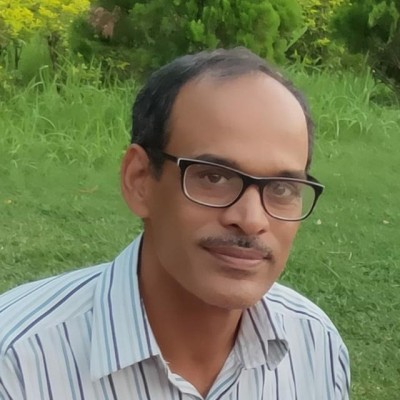
Presented by: Professor Pradip Mandal, IIT Kharagpur
Description: “Efficient parallel processing and self-learning mechanisms of human brain has inspired scientists to mimic its working mechanisms in artificial systems. Artificial neural network (ANN) systems essentially follow the working principles of the human brain, consists of many neurons connected through synapses. ANN has wide range of applications such as, biomedical engineering, chemical engineering, agriculture, stock markets, smart electronic gadgets, and many other fields. Though the ANN based systems have evolved a lot, their power efficiency is far behind than that of human brain, which consumes around 20 W during daily activity. Third-generation ANNs, the spiking neural networks (SNNs), are specifically designed to closely mimic the spike-based processing of the human brain, making them the most power-efficient among all ANNs. There are several research efforts to build silicon spiking neural networks over the past decades. Most of the existing SNNs are suitable for processing of unipolar signals because, these architectures are built to mimic biological system that essentially process unipolar inputs. Thus, for a bipolar input signal, the input should be first converted to a unipolar signal by adding an offset at the input.
In this research, we have proposed a novel spiking neural network, specifically designed to process bipolar inputs without requiring an input offset. The proposed system consists of two bipolar neuromorphic cores: a bi-directional spiking neuron (BSN) and a bipolar silicon synapse (BSS). The proposed BSN can sense a bipolar input signal and generate two distinct types of output spikes depending on the input polarity. These spikes are then received by the proposed BSS and generate a bipolar post-synaptic current (PSC) for the next neuron. A prototype system has been designed in TSMC 65nm process technology, and the simulated behaviour has been analyzed. Various neural network architectures have been explored, and their efficiency has been verified through simulations. A silicon prototype of the proposed BSN has been characterized. An ultra-low-power version of BSN is also proposed, dissipating only tens of fJ per spike.”
Bio: Pradip Mandal received the B.E. degree in electronics and telecommunication engineering from the Bengal Engineering College, Shibpur, India, in 1989, and the M.E. and Ph.D. degrees in electrical communication engineering from Indian Institute of Science, Bengaluru, India, in 1991 and 1999, respectively. In 1997, he was with Motorola India Electronics. From 1998 to 2002, he was with Philips Semiconductors. In 2002, he was with Alliance Semiconductor, where he was involved in dc–dc converters and power supervisory circuits. Since 2004, he has been with the Department of Electronics and Electrical Communication Engineering, IIT Kharagpur, India, where he is currently a Professor. His current research interests include the design of Switch-Capacitor based on-chip power management system (dc-dc converters), High speed interface circuits (current mode transmitter-receiver pair, serializer-deserializer, delay-lock-loop, phase-lock-loop), Signal acquisition front-end (Instrumentation amplifier, delta-sigma modulator), Neuromorphic circuit and Design automation for analog / mixed-signal integrated circuits.
Hosted by: Assistant Professor Soumya Bose, Electrical & Computer Engineering Department
When: Friday, November 20th from 10:30 AM to 11:30 AM
Location: Engineering 2, Room 215
Zoom Details
https://ucsc.zoom.us/j/94175579081?pwd=l5aGWOmgULM8bMtUKJ7rzeVqbpw3Gj.1
Meeting ID: 941 7557 9081
Passcode: 783235