• ECE 290 Seminar: Memristors for a brain-scale neuromorphic chip

    Engineering 2 Engineering 2 1156 High Street, Santa Cruz, CA

    Presenter: Sung-Mo “Steve” Kang, Distinguished Professor Emeritus and Research Professor, UC Santa Cruz   Description: Recently, applications of artificial intelligence (AI) have far outpaced Moore’s law in chip development, thus creating an increasingly large gap between user demand and the supply that the semiconductor industry can deliver. In this talk, we will discuss the unique […]


  • CM Seminar – Alex Olwal, “Human-Centered Augmentation: Interacting with Matter, Humans, and Machines”

    Engineering 2 Engineering 2 1156 High Street, Santa Cruz, CA

    Presented by: Alex Olwal Description: “In this talk, I will share my perspectives on the evolution and future of human-centered augmentation, through the lens of two decades of research and development. Drawing from experiences across academia and industry, I will discuss insights from having led projects in augmented reality, accessibility, electronic textiles, novel sensing and […]

  • Seminar Series | What you may not know about groundwater management in California with Ruth Langridge

    Interdisciplinary Sciences Building 7487 Red Hill Road, Santa Cruz, CA

    Host: ENVS Personnel Committee Groundwater is a critical source of California’s water supply. Many basins in critical overdraft are now being managed under the 2015 Sustainable Groundwater Management Act (SGMA) to support state goals of sustainable and equitable management. However, court adjudicated basins that encompass over 8,000 square miles and are home to nearly 11 […]

  • AM Seminar: Using Math and Experiments to Study the Control of Cell Metabolism

    Jack Baskin Engineering Baskin Engineering 1156 High Street, Santa Cruz, CA

    Presenter: Denis Titov, Assistant Professor, University of California, Berkeley Description: Cells run thousands of chemical reactions simultaneously, and these reactions must be precisely controlled—like a thermostat that prevents overheating. When this control fails, diseases including diabetes, cardiovascular disease, and fatty liver disease result. One key control mechanism is allosteric regulation, where a small molecule binds […]

  • Discover Bioinformatics: Data, Biology & Innovation

    Silicon Valley Campus 3175 Bowers Avenue, Santa Clara, CA, United States

    Lead the next wave of innovation in life sciences and data As biotechnology and data analytics converge, the demand for professionals who can interpret complex biological data and drive discovery continues to grow. Learn how experts in bioinformatics use computational tools, programming, and molecular biology to transform raw data into scientific and medical insights. Your […]

  • Sheaves, T. (CSE) – Timing Side-Channels in Commercial ReRAM: Toward ReRAM Pentimenti

    Engineering 2 Engineering 2 1156 High Street, Santa Cruz, CA
    Hybrid Event

    Recently, a class of non-invasive hardware side-channel attacks has been discovered in field-programmable gate arrays (FPGAs). These attacks extract remnants of prior users’ activity that persist as transistor defect states within reconfigurable routing resources. These remnants are known as FPGA Pentimenti. Resistive random-access memory (ReRAM) is a compelling candidate for pentimenti-like attacks beyond FPGAs. However, […]

  • Figuerres, S. (ECE) – Ion Transport Mechanisms for Bioelectronics

    Jack Baskin Engineering Baskin Engineering 1156 High Street, Santa Cruz, CA

    Ion transfer as the movement of charged species across spaces and interfaces is the basis of signaling in nearly all biological systems. My research is grounded in the idea that precise control over ion transfer enables direct manipulation of biological function. Specifically, I focus on how ion transport can be engineered to regulate both collective […]

  • Bose, S. (ECE) – Learning-Augmented Optimization, Control, and Inference in Modern Power Systems

    Engineering 2 Engineering 2 1156 High Street, Santa Cruz, CA
    Hybrid Event

    The electric grid is essential to modern society, and recent developments such as renewable energy sources (RESs), battery energy storage systems (ESSs), and microgrids (MGs) have necessitated novel computational methods for planning and operations. Machine learning offers a promising lever here, both as an accelerator for and proxy to traditional optimization-based problems. In this thesis, […]

  • Morey, C. (BMEB) – Innovations in Interdependence: Genomic and Functional Evolution in Invertebrates and Their Intracellular Symbionts

    Biomedical Sciences Building 575 McLaughlin Drive
    Hybrid Event

    Intracellular symbionts are microorganisms, such as bacteria, that live within host cells. These associations are widespread throughout the invertebrate tree of life, and can perform a diversity of key metabolic, immune-response, or other functions that the host is dependent on for survival or reproduction. Intracellular symbioses allow both the host and the symbiont to occupy […]

  • Career Opportunities at Institute on Aging

    Social Sciences 2 College Ten Road, Santa Cruz, CA

    Join us for snacks and to meet program leaders and recruitment specialists and learn about the opportunities available for careers at IOA! Institute on Aging is a nonprofit that was formed in San Francisco over 40 years ago and expanded into Santa Cruz & Monterey in 2024. We are constantly growing our team thus looking for […]

  • Engineering 2 Engineering 2 1156 High Street, Santa Cruz, CA

    Presenter: Sai Teja Peddinti, Google Abstract: As the digital landscape expands, traditional models of threat mitigation and user support are failing to keep pace with the unprecedented security, privacy, and safety challenges. Fortunately, the rise of large language models (LLMs) offers a powerful new paradigm for defense. This talk explores how LLMs are being leveraged […]

    Free
  • Xu, D. (BMEB) – Interplay Between CENP-A, DNA Methylation, and H3K9me3 in Defining Centromere Identity

    Engineering 2 Engineering 2 1156 High Street, Santa Cruz, CA
    Hybrid Event

    Centromeres ensure proper chromosome segregation during cell division, yet the organization and regulation of centromeric chromatin within satellite DNA arrays remain incompletely understood. Here, we leverage the complete diploid human genome benchmark (T2T-HG002) to provide a detailed study of centromeric sequence and chromatin architecture on individual haplotypes. Using adaptive-sampling-enriched, ultra-long-read DiMeLo-seq, we achieve single-molecule chromatin […]

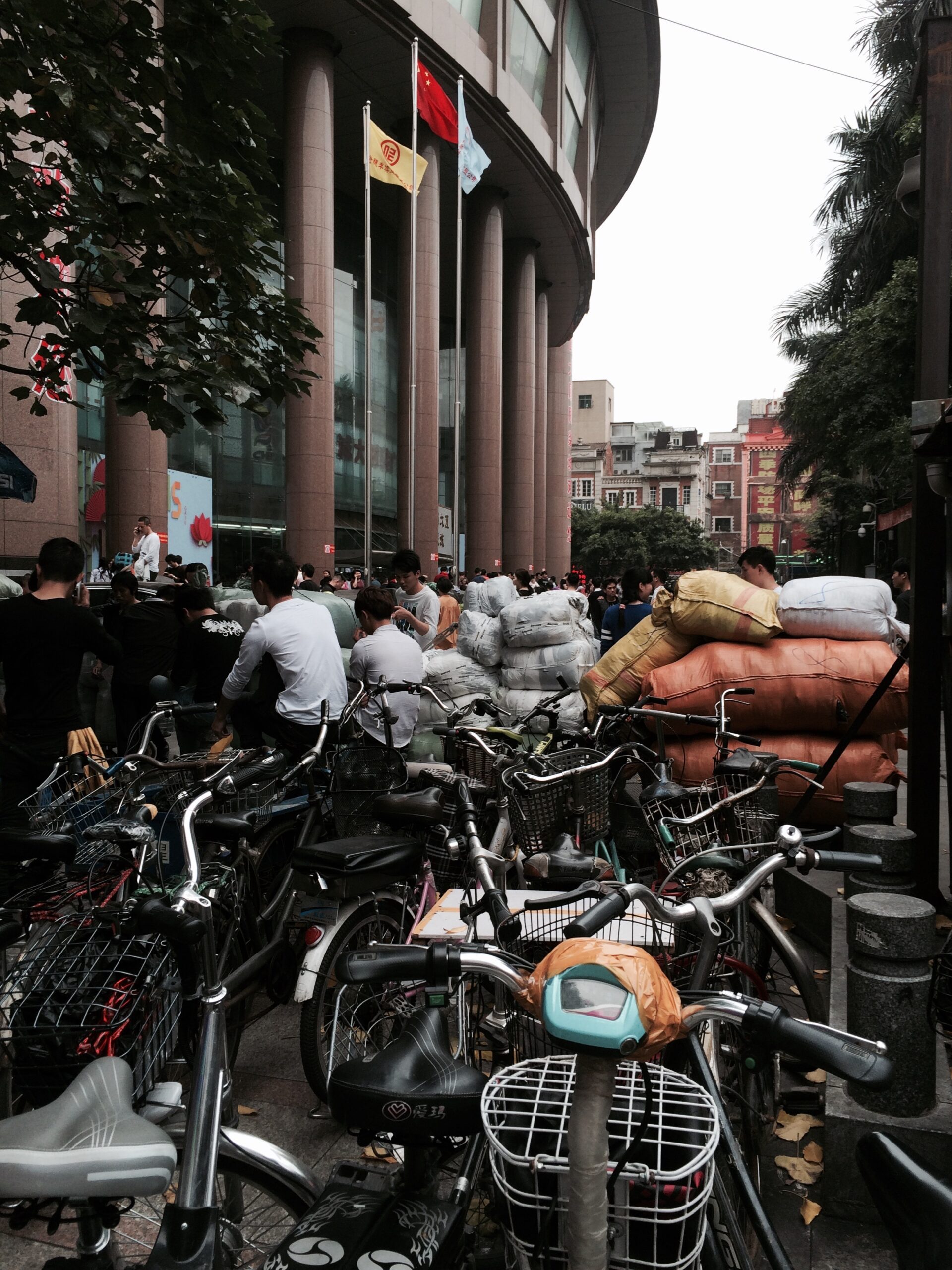
  • Precarious Accumulation: Fast Fashion Bosses in Transnational Guangzhou

    Social Sciences 1 Social Sciences 1, Santa Cruz, CA

    Please join us on June 3rd for the final Anthropology Colloquium of 25-26, “Precarious Accumulation: Fast Fashion Bosses in Transnational Guangzhou,” featuring Nellie Chu of Duke Kunshan University (UCSC PhD ’14).

  • Xie, Y. (CM) – Crop Circles of Play: Forces and Formation in the Dyadic Magic Circle

    Virtual Event

    Cooperative two-player play produces distinctive social experiences between players: intimacy, trust, cooperation, communitas. Since Huizinga, the frame within which these experiences arise has been called the Magic Circle: a temporarily-set-apart space through which play does its social work. It has been a central organizing concept across game studies, performance theory, and HCI because it points […]

  • Kordonowy, S. (CS) – The Role of Circuits in Near-Term Quantum Computation

    Engineering 2 Engineering 2 1156 High Street, Santa Cruz, CA
    Hybrid Event

    As quantum computing transitions from theory to practice, understanding which algorithms suit near-term devices becomes critical. Current quantum computers are severely constrained by limited qubit counts, short coherence times, and high error rates that quickly degrade computation into noise. This thesis addresses two interconnected questions: what non-trivial computational tasks can near-term devices execute and how […]

  • Okamoto, F. (BMEB) – Improving read-to-pangenome alignment in complicated genomic regions

    Engineering 2 Engineering 2 1156 High Street, Santa Cruz, CA
    Hybrid Event

    Many genetics pipelines start by aligning sequencing reads to a reference genome. Aligners attempt to find the position in the reference sequence which best matches the read sequence, but this breaks down when the reads come from a sample with variation relative to the reference. A proposed alternative, pangenome graphs, is supposed to fix such […]

  • BME 280B Seminar: Accelerating the diagnosis of rare diseases using multi-omics

    Biomedical Sciences Biomedical Sciences Building Red Hill Road, Santa Cruz, CA

    Presenter: Stephen Montgomery, Endowed Professor of Pathology, Genetics, Biomedical Data Science, Computer Science, Stanford University   Description: N/A   Bio: Stephen Montgomery is an Endowed Professor of Pathology, Genetics, Biomedical Data Science and, by courtesy, Computer Science at Stanford University. He has trained in multiple countries including Canada, Germany, England, and Switzerland. He is best […]

  • Lietz, R. (CM) – Reflecting on Failure: Designing and Evaluating Archetype Profiles as a Tool for Self-Reflection

    Silicon Valley Campus 3175 Bowers Avenue, Santa Clara, CA, United States
    Hybrid Event

    Self-reflection holds significant potential for learning, behavior change, and emotional processing, yet designing technologies that effectively support it remains challenging, particularly when reflection involves difficult experiences such as failure. Most current technologies avoid negative experiences altogether, leaving users without support at precisely the moments when reflection could be most valuable. This dissertation investigates how technology […]

  • Imlau Dagostini, J. (CSE) – Intent-Driven Orchestration for Scientific Computing

    Jack Baskin Engineering Baskin Engineering 1156 High Street, Santa Cruz, CA
    Hybrid Event

    The growing complexity of high-performance computing (HPC) systems poses a fundamental challenge for domain scientists, whose primary objective is to obtain scientifically valid results rather than to optimize resource utilization. Modern leadership-class facilities combine heterogeneous CPUs, GPUs, and specialized accelerators across systems that simultaneously support traditional scientific simulations and AI-driven workloads. This creates a vast, […]