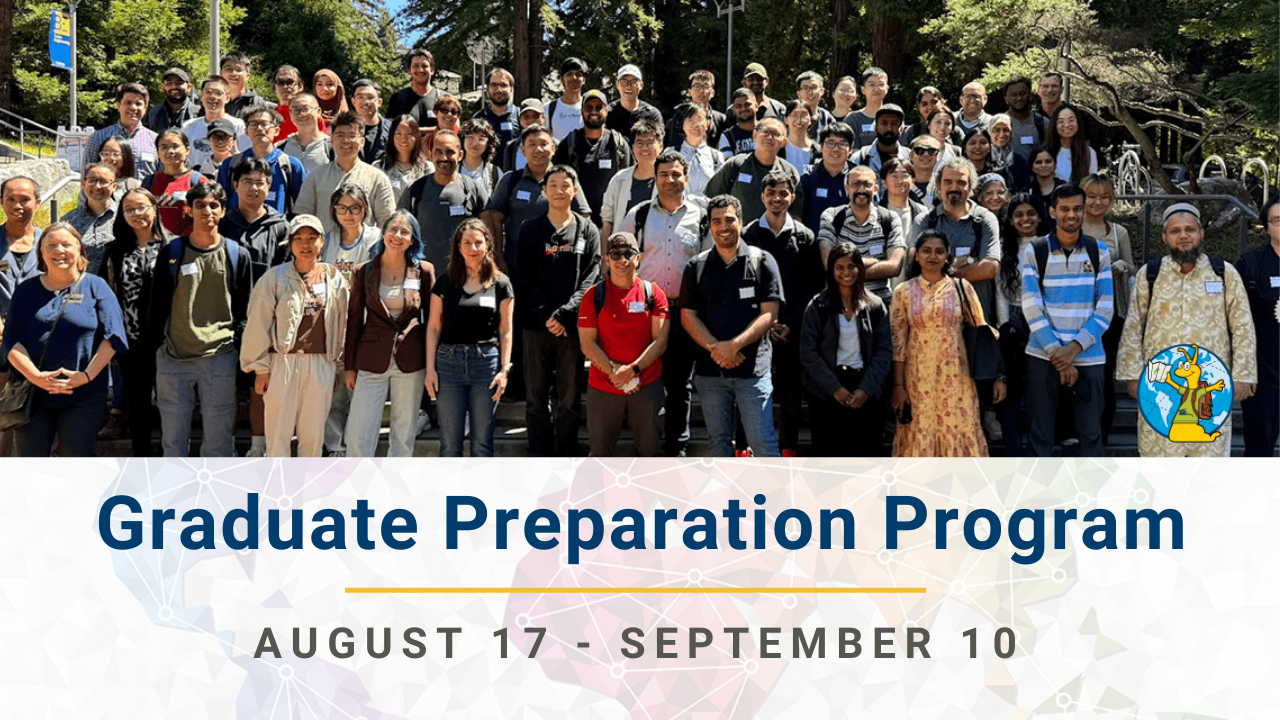
Graduate Preparation Program
The Graduate Preparation Program (GPP) is a four-week intensive non-credit course offered in person on the main campus prior to the fall quarter, which is open to all current and […]
$1275
The Graduate Preparation Program (GPP) is a four-week intensive non-credit course offered in person on the main campus prior to the fall quarter, which is open to all current and […]

Building safety into innovation In this information session, you’ll gain insight into current industry trends, emerging skills, and career opportunities. We’ll dive into how our Clinical Trials Design and Management program is designed to help professionals build expertise, stay competitive, and achieve their educational and career goals. Whether you’re looking to advance in your current role, transition […]

Verbal autopsy (VA) is a well developed tool to collect information describing deaths outside of hospitals by conducting surveys to the relatives and caregivers of the deceased person. It is routinely-implemented in low and middle income countries, where it often lacks sufficient resources to conduct the autopsy. The main task is to estimate both individual […]
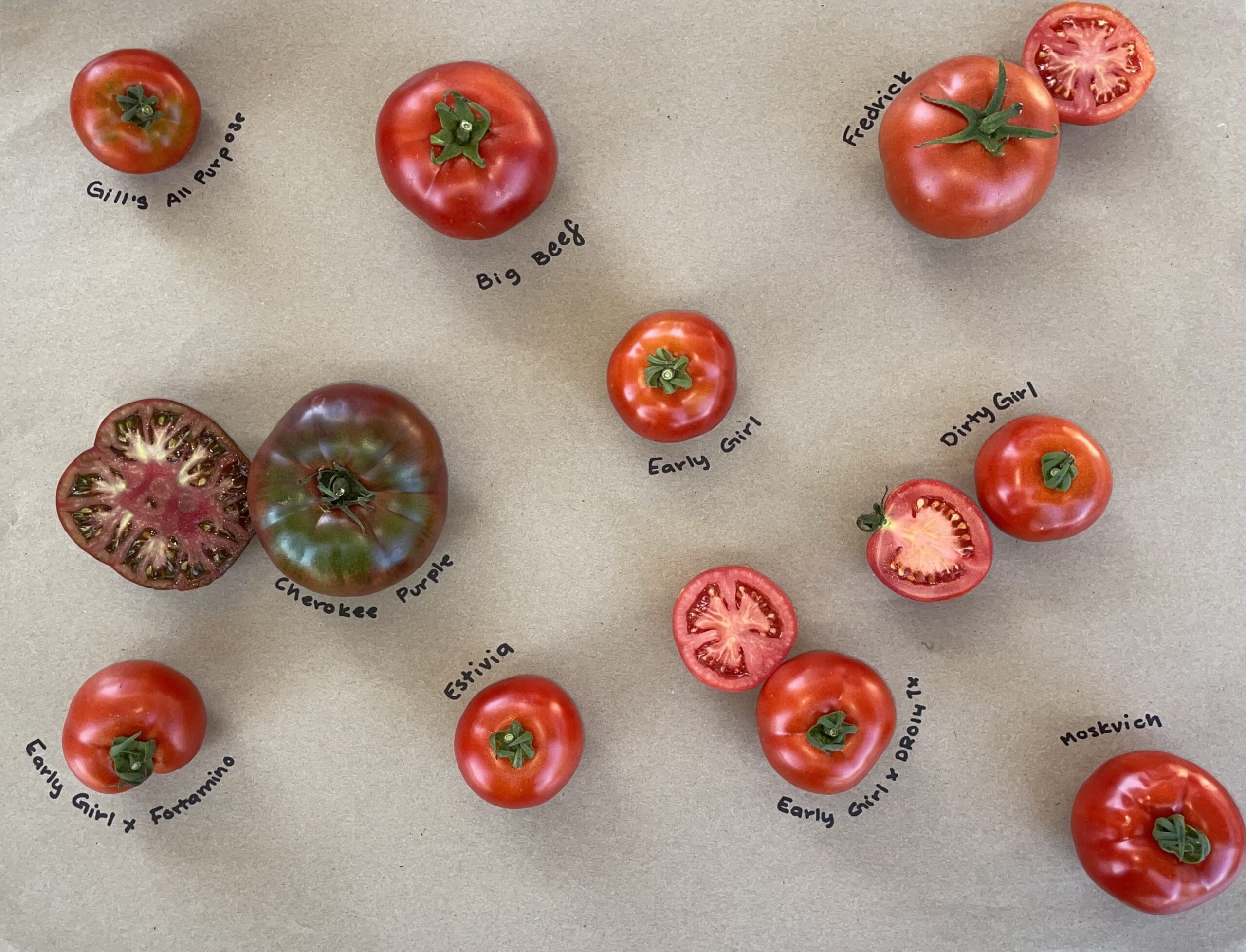
Climate change models predict increasingly hot and dry conditions, raising concerns about impacts on agricultural production and food security. Answering this challenge is organic dry farming, a sustainable practice that allows growers to produce crops under arid conditions with little irrigation. Researchers from UC Santa Cruz and the University of Oregon are studying the environmental […]

Explore how to lead with AI—whether you want to build it or apply it. In this information session, discover two dynamic pathways: AI Business Practices, for professionals seeking practical AI tools to boost productivity without coding, and AI Engineer, for those ready to design and deploy production-ready AI systems. Learn how generative AI, automation, and intelligent agents […]
First Saturday Tours are a wonderful way to introduce yourself to the Arboretum or to deepen your knowledge of the Arboretum’s plant collections. Each tour is a little different depending on the time of year, the interests of the tour guide, and the people who join in. For example, you might learn about the birds […]

Spatially dependent data are common in environmental and climate studies, where Gaussian process models are used for prediction and uncertainty quantification. Learning their covariance structure involves both statistical and computational challenges. Likelihood-based inference may be sensitive to covariance misspecification, while repeated evaluation of prediction-oriented criteria can be computationally demanding. To study these issues, we develop […]

Understanding neuronal function requires measurements that capture both the rapid dynamics and spatial organization of neural activity. Conventional neural interfaces often prioritize either high temporal resolution through electrophysiological recording or high spatial resolution through optical imaging, while integrating these modalities within a single interface remains challenging. This work seeks to develop a transparent, flexible, and […]
Multivariate dependent discrete data routinely arise in microbiome studies. Analyzing these data presents interesting statistical challenges, such as high dimensionality, excess zeros, large heterogeneity across samples, and temporal dependence in longitudinal studies. Drawing inferences about objects of primary scientific interest—such as temporal trajectories of microbial abundance, microbial interactions, clusters of microbes similarly associated with environmental […]
Coherent wireless reception depends on accurate channel state information (CSI), yet acquiring CSI through pilot transmission consumes time–frequency resources that could otherwise carry data. This tradeoff becomes more pronounced in time-varying and frequency-selective channels and in short-packet communications, where accurate channel estimation is challenging and pilot overhead can be significant. This dissertation investigates how CSI […]
Artificial intelligence and machine learning models depend on large and diverse datasets to learn patterns across different situations and generalize to cases they have not seen before. In cybersecurity, suitable data is difficult to find for two main reasons: first, sensitive information limits what organizations can share; second, public datasets often lack the coverage or […]
The separation of memory and processing in conventional computer architectures leads to significant energy consumption associated with data transfer, known as the von Neumann bottleneck. Two-dimensional (2D) materials provide a promising platform for developing nanoscale memory devices for in-memory and neuromorphic computing because of their atomic-scale thickness, lack of dangling bonds, and ability to form […]

Slime is on Their Side: Celebrating 40 (Official) Years of the UCSC Banana Slug Mascot While rumors and stories abound about the sea lion vs. banana slug controversy of the 1980s, the full history of the banana slug as UCSC’s long-running student chosen mascot has rarely been explored. In honor of the 40th anniversary of […]
Aluminum and silver are excellent metal-bases for astronomical telescopes designed for broadband spectral measurements. In particular silver excels in the violet to infrared spectral range range with over 95% reflectance. In turn aluminum excels deep ultra-violet to infrared with over 90% reflectance across the bulk of its spectral range. In astronomical telescope optics, each percent […]

Join UC Santa Cruz Healthcare Pathways for a live online information session to learn about our Premed Postbacc Cohort, Premed and Pre-Health DIY Pathways, and other program offerings. We’ll provide an overview […]

Nonsense-mediated mRNA decay (NMD) is a translation-coupled quality control pathway that degrades mRNAs that harbor a premature termination codon (PTC) and 5-30% of normal cellular mRNAs. The NMD field sits […]
A complete and accurate genome reconstruction serves as the foundation for studying an organism’s biology and the mechanisms underlying disease. It is particularly critical for reference genomes, which provide a […]

Join UC Master Gardeners at the UCSC Arboretum for class no. 4 of 4 that teaches you how to help protect the environment and support local wildlife.

Village murders! Occult conspiracies! A modern mystery tinged with the uncanny! Join the Pickwick Club as we explore Dickens and Christie across four landmark detective novels.
In person and via Zoom (Meeting ID: 978 5545 8946, Passcode: 454736). If you are unable to stream the talk live and need to access a recorded version, please contact […]